

Chapter Six
In the City of Light: Study Abroad in Paris, France

If you enjoy, benefit from, or learn something new in these chapters, please consider making a donation to at least one or more of the following fundraisers (which I explain further in my autobiography), or directly to my Venmo. Thank you.
Chapter 6. In the City of Light: Study Abroad in Paris, France
After a brief conversation with my wonderful mission president in which he kindly encouraged me to begin seeking for my eternal companion, I joined my father and my sister Anne Marie for the long automobile voyage from Catania, Italy to Paris, France. I was very happy to see my father again and I was doubly happy to see my little, but growing sister Anne Marie again after a couple of years.
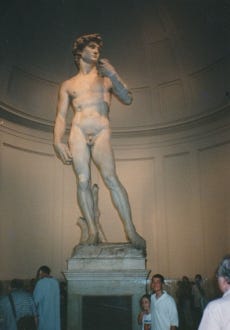
We visited Syracuse briefly before we began to make our way up from Sicily to the West coast of Italy, pausing briefly to see the sites in Pompeii. We toured Rome briefly, just long enough to see the essential sites such as the Sistine Chapel. We toured Florence briefly (our friend Robert Ricks was a missionary there at the time), just long enough to see the essential sites, such as the Uffizi gallery and Michelangelo’s David. We also toured Pisa briefly, just long enough to take pictures near the leaning tower.
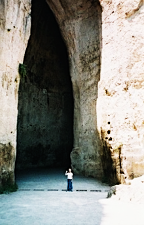
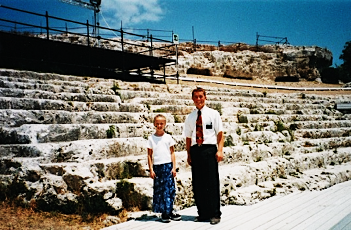
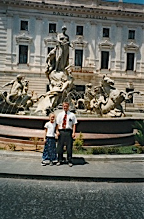
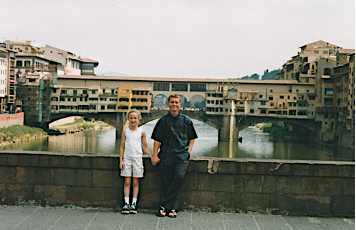
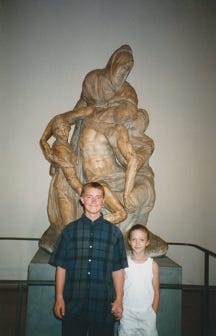
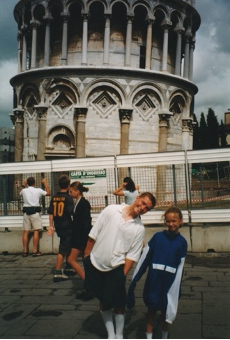
We made our way across the border between Italy and France, past Mount Blanc, and eventually to the little town where we stayed before going to Paris: Tournon-en-Brie. I was excited to see my mother and little Abigail, but I would have to wait to see my brother Nathaniel, because he was anxiously engaged in missionary service for the Church of Jesus Christ of Latter-day Saints not far from us. I would also have to wait to see my brother Jared because he was still in the United States. Jared was involved in math camps and other activities in the United States before joining the entire Hancock family in France.
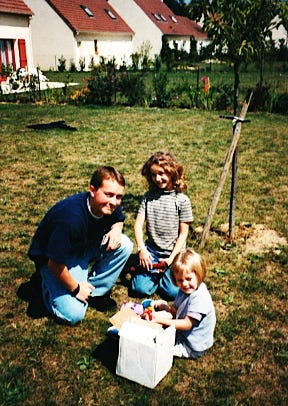
Perhaps it is not a coincidence that my father, my sister Anne Marie, and I entered France just after France won the World Cup, and just after the French Independence Day, or Bastille Day on July 14, 1998. My father and I watched all the goals from the World Cup.
My missionary friend, Anderson Payet and I met up in Tournon-en-Brie because my family stayed with their adopted uncle Christian Euvrard. We visited the countryside together and reminisced about the mission and other things. When I finally saw little Abigail again for the first time, she didn’t quite remember who I was because she was only a baby when I left for Italy. But I was grateful to see her and my mother again, and to hug them and spend time with them.
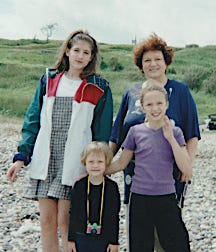
On July 17, 1998, Anderson Payet and I went to the LDS Institute in Paris, and then we visited several other sites, including Notre Dame, la Tour Eiffel, and Champs Elysée. I had already begun to review and refresh my French a little bit during the last couple of months of my mission in Italy, and I was excited to immerse myself in the language and culture of France just as I had done in Italy.
In some ways, I felt that I was continuing to serve an extended mission in France. I noted in my journal that the language was difficult, but that after only a week I was already able to communicate in quite well in French. When my family and I went to the ward in Melun, I learned that my brother Nathaniel began his mission there. I met a beautiful young lady from Africa named Dominique Uraton. I had a crush on her almost immediately, in part because she was beautiful, and in part because I was excited to begin dating again.
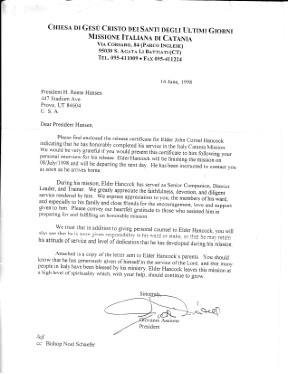
Our family friend Christian Euvrard released me from my calling as a full-time missionary for the Church of Jesus Christ of Latter-day Saints. He asked me what I had learned on my mission. It was an impossible question to answer briefly, but I summed it up by saying that I had learned to love and serve the Lord and to love people. Christian congratulated me, gave me a certificate, assured me that the Lord was proud of my work, and encouraged me to always remember and continue to apply the lessons that I had learned on my mission.
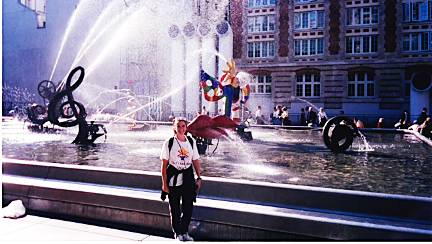
I joined the rest of my family in the quest for an apartment in Paris. My parents then left me with some francs and my two sisters for a while as they did more apartment hunting together. Annie, Abby, and I went to Kentucky Fried Chicken, visited the fountain by the Pompidou Museum, and drew pictures to pass the time. The experience inspired a poem:
“Au Centre Pompidou
We played ‘eye spy with my little eye’
Near the fountain, it was hard to keep dry.
My sister spied blue, and blue was the sky.
Thousands of people were seen passing by.
Why? I can’t answer, no matter how hard I try.
At the closed Pompidou Museum.”
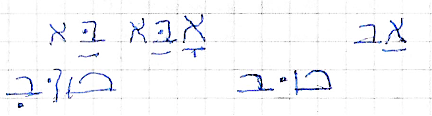
When my parents returned, they picked up my sisters and went to hunt for apartments again while I remained at the LDS institute to talk with the missionaries and others. I met a woman named Claudine who taught a Hebrew class at the LDS institute. I was fascinated, and I wrote my first Hebrew letters in my journal. There was also an institute class on Temples and the Book of Revelation which I enjoyed greatly, and which caused me to reflect on how to continue to put the Lord first in my life and prepare for His Second Coming.
My parents found a potential apartment in the ninth arrondissement not too far from the Sacre Coeur. Eventually they settled on an apartment in the fourteenth arrondissement. In the meantime, Nathaniel and his mission president arranged for a time to meet with us briefly.
We met with Nathaniel, his companion Elder Higgs, and President and Sister Brown at the mission home. Nathaniel gave each of us some gum, and a scripture case to Anne Marie. We talked about missionary work, working with members of the Church, and house to house proselyting (“porting” – from the French word for door, “la porte”). We went to a Chinese restaurant together. I noticed that Nathaniel loved the French language, and he loved the missionaries. He was determined to know each one of them.
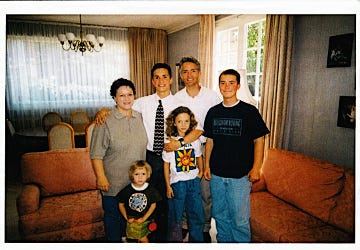
That evening my family visited the Gerdet family for a barbecue. The Gerdets became good family friends. I enjoyed the new experience in Paris, but it also felt strange to be on my own, without a missionary companion. I often joined the Paris missionaries for their appointments with investigators. But I lived with my family again, in a new place. From my perspective, it seemed like many things had changed in my family during my mission. Of course, I had changed, and hopefully for the better. I was especially perplexed because of the tension between my mother and my sister Anne Marie:
“Mom is having more problems with Annie. It must be hard raising kids. Annie and mom aren’t getting along well right now. I think that it is an important time to start getting along, especially so that Annie can have a friend to open-up to – good practice for the upcoming teenage years. But what do I know about families?”
I read Carlo Collodi’s book Pinnochio in the original Italian during this time. It’s a beautiful little book that I hope to read to my own children someday. Just imagine how long the noses of many of our politicians and elites would be if their noses were like Pinocchio’s nose.
When the French missionaries learned that I spoke Italian, they often invited me to join them whenever they found an Italian contact. I noted in my journal: “I don’t think that it’s a coincidence that I meet Italian people all the time, but I like it.” I was still very much in missionary mode. I even translated Elder Gene R. Cook’s (An LDS Church leader) talk into Italian for an investigator who came to the conference at which he spoke.
I also took a Book of Mormon class at the LDS Institute and studied the Book of Mormon in French, which helped me to rapidly improve my French speaking, comprehension, and writing skills. I already had a great foundation in French from my father and from my teachers – Madame Welch at Meridian, Monsieur Hercules at Waterford, and Monsieur Whitely at BYU – but full immersion in French with native speakers made all the difference.
I also continued to study Hebrew in Claudine’s Hebrew class. My interest in and fascination with Judaism, Hebrew, Israel, and all things Jewish grew, in part because of the Hebrew class, but also because of the general Jewish influence in Paris. I even joined the missionaries to share the Gospel with a Jewish man named Henri. This interest in Hebrew, in Israel, in Judaism, and in all things Jewish began in my youth, grew in France, and eventually led me to the Holy Land.
One of the funniest things about my journal entries during this time is how excited I was to meet and talk with girls my age. I had spent the last two years with my heart locked to any romantic relationships, but when I finished my mission, I frequently wrote about how I felt when cute girls flirted with me. It was something exciting and new, and I was beginning to think seriously about finding the right girl for me.
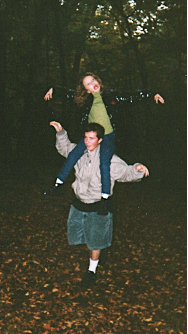
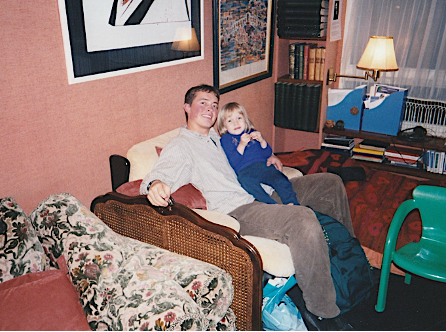
By August of 1998 I had begun to write in French from time to time in my journal. My friends, Troy, Sam, Ben, and many others, returned home from their missions around the same time. I played soccer with some French friends that I found. My sisters and I watched a lot of Disney movies, and we even went to Euro-Disney on a couple of occasions. My father and I went to a Bach concert in the Sainte Chappelle. We listened to the Brandenburg Concertos and other pieces. Exquisite. I was delighted.
I remember another occasion in a cathedral in France when I listened to someone play a piece by Bach on the organ. I like Bach most anytime, but the sound of Bach’s organ music reverberating deeply through the space of an old French cathedral is unforgettable. I remember to think of my ancestors who built organs whenever I think of the organ. I also had the opportunity to listen to Mozart’s Requiem in the Bois de Vincennes. Sublime. Bach. Mozart. How did they do it?
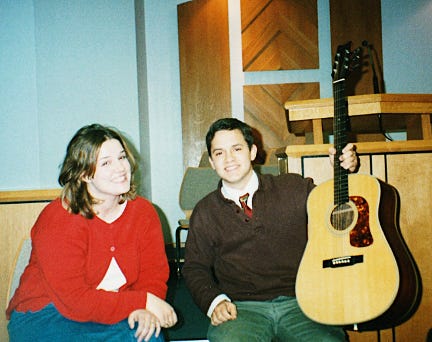
My brother Jared arrived in France on August 25, 1998. We immediately went to play soccer together, and I noted in my journal that he played very well and even made a couple of assists. I also noted that he played the guitar very well. Nevertheless, I could tell that he had been through very difficult experiences while I was serving as a missionary in Italy.
Sometime after Jared arrived in Paris, I had a terrible nightmare. It was more than a nightmare because I felt something attack me while I was sleeping. It was like some evil being that clawed at my back and bound me so that I could not move, even after I awoke. I was paralyzed. I felt that I was attacked and paralyzed by some dark and sinister being from the unseen world. When I was finally able to move, I went to my parents’ bedroom to try to sleep again. It was more awful than the nightmare that I had in the MTC, which was also awful.
A few days later I received the good and exciting news that I had the opportunity to travel to the LDS Temple in Frankfurt Germany with a group of French saints. Jared came too. I recorded my thoughts about the experience in my journal:
“A few thoughts on participating in Temple ordinances: I felt the Spirit perhaps most of all contemplating the creation of man. The whole creation, of course, is a miracle. But I felt more grateful for the privilege to be alive, to live, to be a child of God. God really created me and all things good. We are in the image of God. We are to be kings and queens according to faithfulness. Elohim, through His Son Jesus Christ, gave us dominion in our spheres, and commanded us to be happy. I am happy, but somehow, I feel that there is more happiness awaiting. I can’t fathom what it means to have joy that makes you fall, exhausted, or blessings without room to receive them, but I am willing to prepare myself… I believe that this Temple trip, besides helping a couple of people who have passed away, has helped me, given me a fresher view of covenants, and more strength to obey the commandments. I needed it.”
I noted that I liked the sound of the German language. On the return bus ride to France, I mused about the upcoming semester of school and how to learn to study and work on academic things again. I also mused about matrimony. But one thing that I find interesting is that while I was riding the bus out of Germany, back to France, I wrote in my journal in Italian, and then in French, and then I did my best to write the Hebrew alphabet that I was learning.
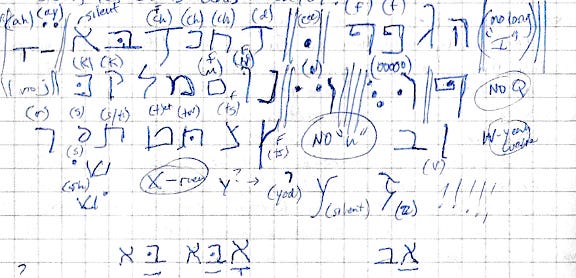
In retrospect, as I consider the significance of the Temple – including work on behalf of the dead – and Germany and the Jews, I can’t help but think of the Holocaust, the Shoah. I was already interested in Israel in my youth, but only much later did I learn of the influence of Judaism in southern Italy and in France. Nevertheless, in France my interest in all things Jewish grew together with my interest in all things French.
We returned to Paris just in time for Anne Marie’s birthday. I recorded in my journal: “It is Annie’s birthday. I love her. She is so special to me. I love to read with her, joke with her, and play with her. She got a special birthday cake from the Quigleys.” In addition to reading Collodi’s Pinocchio, I read James E. Talmage’s masterpiece Jesus the Christ, which is also one of my favorite books.
I recently read Talmage’s masterpiece again, this time in Spanish, Jesus el Cristo. It is a work of great faith and erudition, written in such a way as to invite the Spirit of the Lord to testify of the truth, and to enable the reader to better hear, understand, appreciate, and follow the voice of the Lord. It is a book that I recommend to everyone.
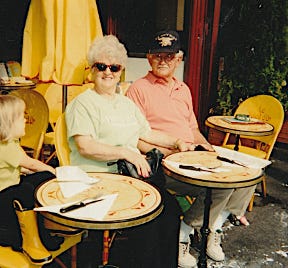
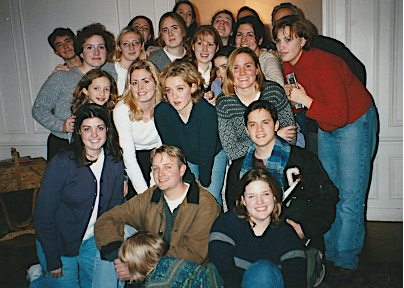
My Grandma Jacque came to France with her husband Ikey Guthrie, and on September 1, 1998, most of the BYU students arrived for the study abroad experience in France. We brought them to the hotel, and then later had an orientation meeting at the LDS Institute. I marveled at the beauty of the newly arrived BYU students, almost all of whom were female. I wondered if it were a requirement for participation in the study abroad program that the students be attractive young females.
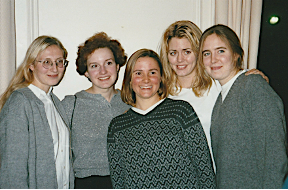
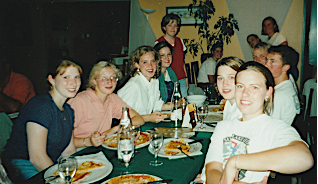
One of the students, Monica Merced, I had already met in my French class with Monsieur Whitely at BYU before my mission. She had also been roommates with my good friend Jenny Marie Mansuetto. I quickly became friends with her and with the rest of the students.
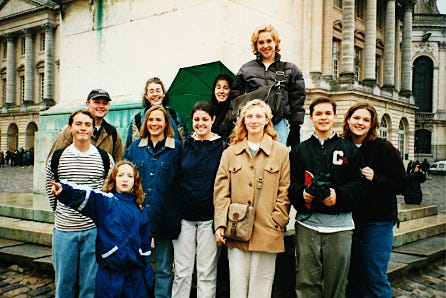
Soon after that, we all travelled together to Nantes. We visited the Chateau d’Angers with the tapestries based on the Book of Revelation. Katy Knudsen (the Knudsens were family friends from our neighborhood in Oak Hills in Provo), Genevieve Clawson, Amber Ericksen, and I toured the chateau together. That night I stayed in a room with Greg Nance, the only other male student in the program besides my brother Jared and myself.
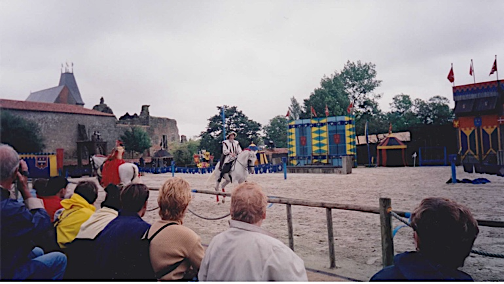
Our next stop was Puy du Fou where we experienced a spectacular medieval festival, a play and light show with hundreds of actors, fireworks, and music. During the bus ride to Puy du Fou, I became friends with Rebecca Sandberg. She knew my friend from Meridian, Marco Poggio, because their families lived in the same neighborhood. Rebecca had also lived in Saudi Arabia for some time with her family. I conversed at length with Monica Merced. I noted in my journal how impressed I was, not only with the beauty of my new friends, but especially of their character and goodness.
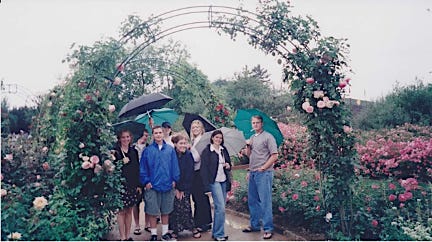
It rained a lot during that day, and I was grateful to share an umbrella with Margaret Nix, Sarah Dolan, and Rebecca. I wrote the names of each BYU student and new friend in my journal: Devon Allison, Natacha Allred, Amber Ericksen, Elizabeth Burton, Margaret Nix, Emily Nolte, Genevieve Clawson, Joanna Dragwa, Julia Martindale, Sarah Dolan, Katy Knudsen, Monica Merced, Michelle Sheide, Laura Severson, Julianne Clegg, Rebecca Sandberg, Suzanne Squires, Nicole Christensen, and Greg Nance. Emilie Harker was our French teacher, and her husband Dustin came with her.
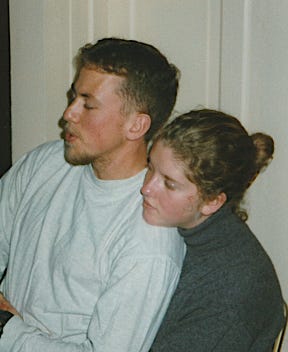
After two years of difficult, painstaking, but enjoyable labor in the Lord’s vineyard, I felt like I had entered paradise. We were in France, visiting castles and the countryside, and enjoying life and each other’s company. I was dazzled by the beauty, virtue, and intelligence of my new friends, and I felt very blessed.
I confess that I wondered if my new circumstances represented a reward for having served the Lord with all my heart, might, mind, and strength for two years. But there was also a rule that students were not allowed to date during the semester abroad program. Furthermore, my mom told me to concentrate on my studies and on other things. I was happy to develop purely platonic friendships, but it was no secret that I soon grew particularly fond of one of the female students in our group.
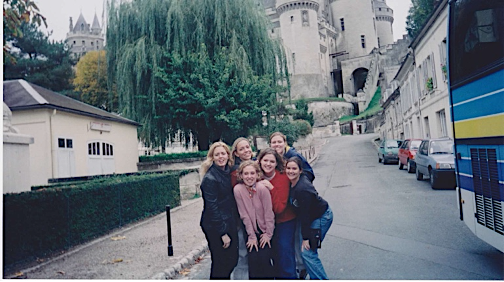
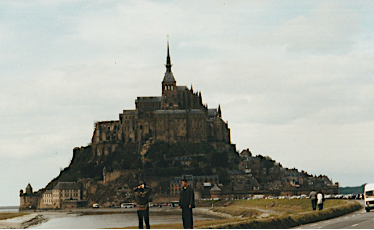
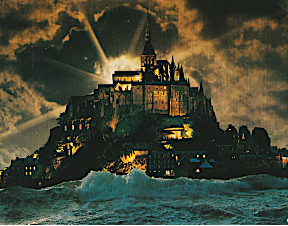
We visited Mont St. Michel, and we listened to a wonderful lecture about the French Revolution by Philippe Bénéton. We visited a World War II Museum and the D-Day beaches in Normandy. We had a very sacred sacrament and testimony meeting at the Normandy American Cemetery.
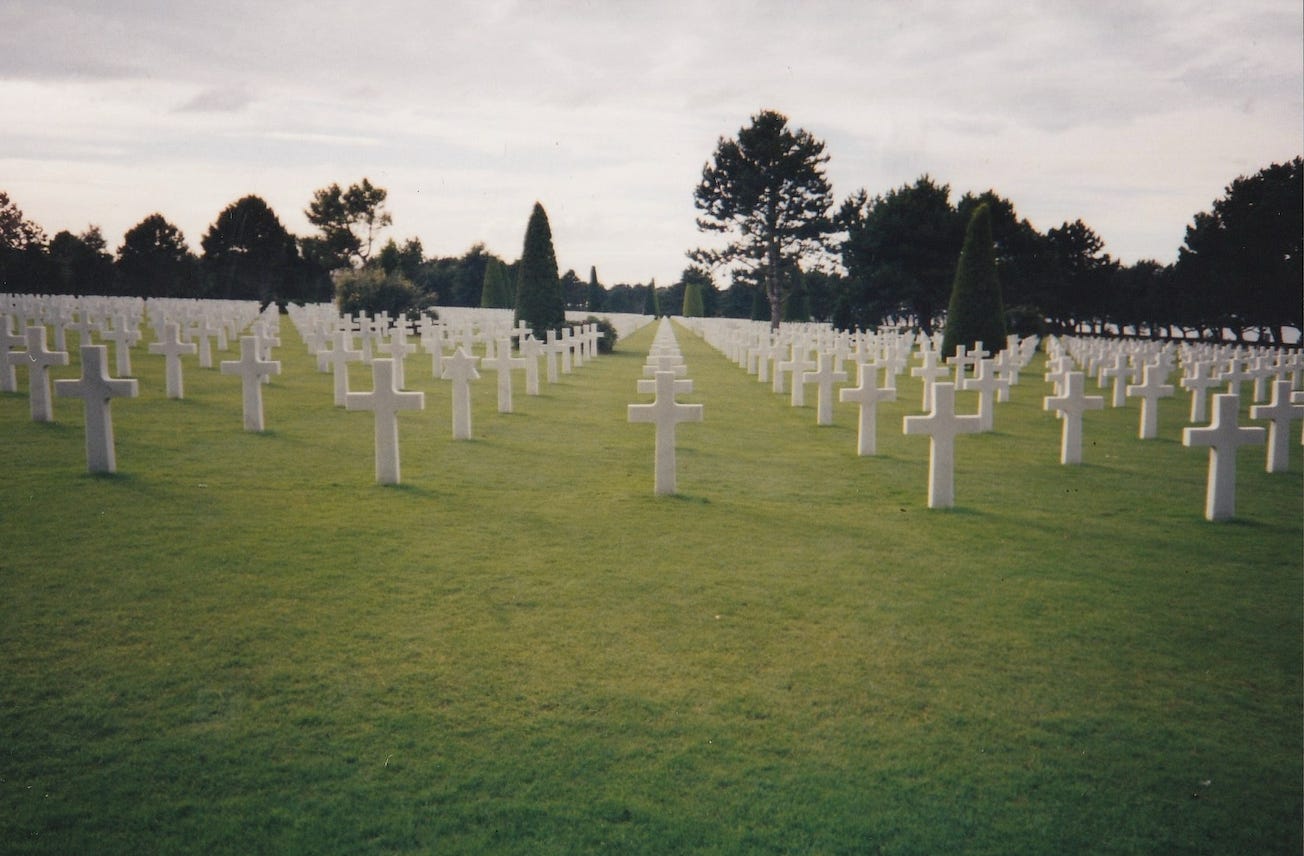
My step-grandpa Ikey fought in the D-Day invasions, and it was the first time that he had returned to the location. He shared his story with us. He said that he felt guilty that he was not buried with the rest of the boys.
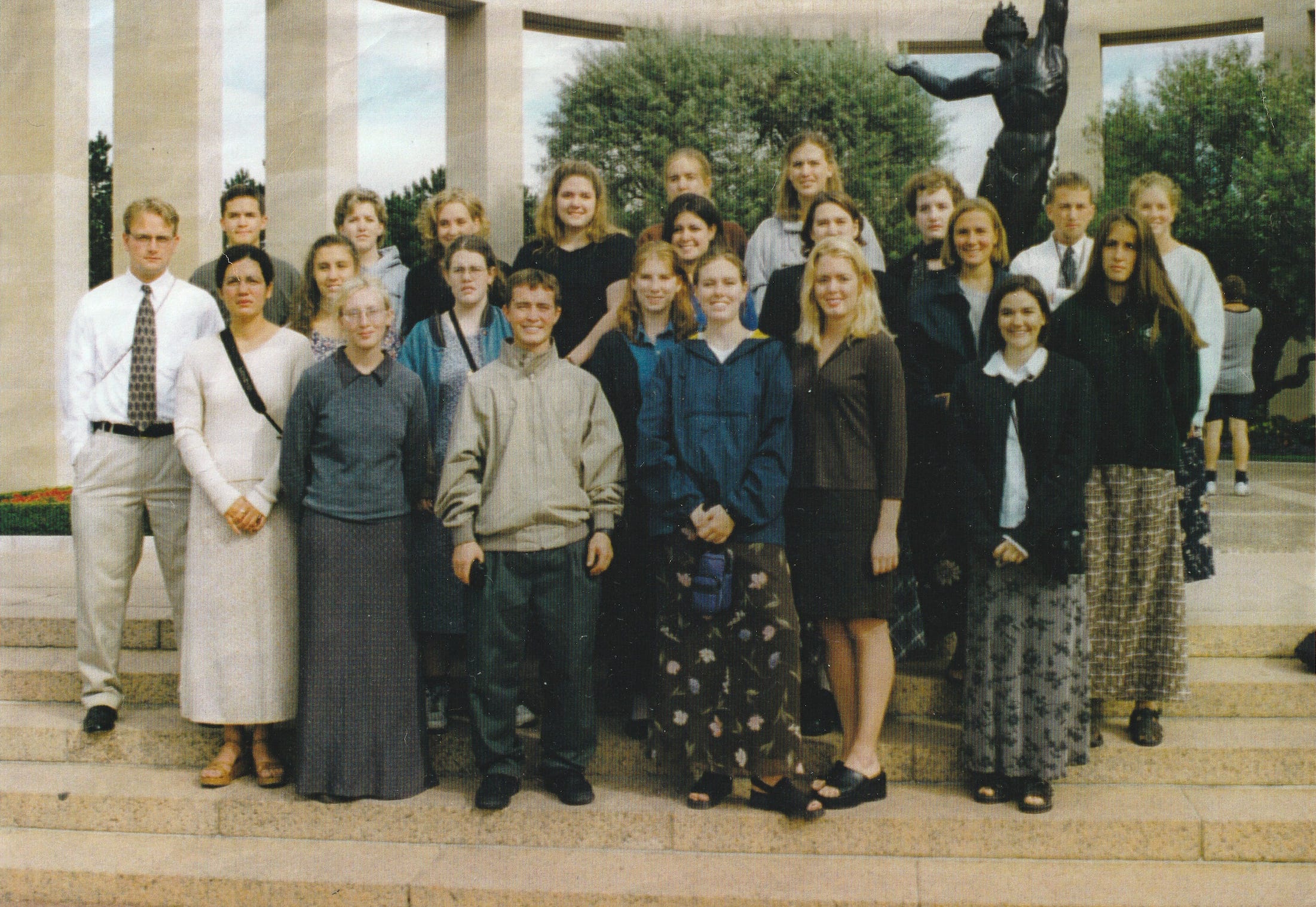
I noted in my journal: “I feel pushed, in some instances, to learn about the holocaust, to learn Hebrew, to go to Israel, to learn about the Jews, to love the Jews.” We arrived at the beaches of Normandy not too long after Tom Hanks, Steven Spielberg, and their crew filmed the movie Saving Private Ryan.
I composed a poem for the occasion:
“10,000 boys once trudged upon this beach,
Upon whose bodies one now freely treads,
The time is past, their thoughts beyond our reach,
Still here remains the courage of these dead.
And if their thoughts, like wind around the trees,
Whispered in the leaflets of our mind,
We would hear the fear that God relieves,
By love and honor of unearthly kind,
We stood upon the steps in soldier stance,
Taps sounded, we saw the many graves,
In these short moments we were not in France,
But in our country far across the waves.”
In France, as I mentioned earlier, I was still very much in full missionary mode. I recorded another missionary experience in my journal:
“I finished my morning prayers, when afterward an old missionary type of prayer came into my heart that today someone would want to talk to me about the Gospel, that someone would come and talk to us. I forgot about my request and went about my daily activities. Later that same day, upon returning to the council (a place for foreigners seeking service or jobs), Dustin and I met a young man on the metro. He started talk to us because he heard our broken French. He is from a Central African country near Cameroon. His name is Broberg. He walked with us to Les Halles. We spoke, Dustin listened in. We found out that he had been in France for three years as a student, and that he was a Protestant. He told us that he had seen the missionaries before, but never talked to them. It was not until this point that my heart filled with gratitude, and I remembered the prayer that I had offered, and that God was answering my prayer on the spot. I was happy. We invited him to see the exposition by the Institute. Hopefully he’ll come.”
The next day, I requested a Priesthood blessing from my father. My brother Jared recorded the blessing in my journal:
“John Cornel Hancock, by the authority of the holy Melchizedek priesthood, I lay my hands upon your head to bless you by your request. I bless you that this semester you will have health and strength, and to have a fulfilling stay in France. At this point after your mission, I bless you to look on your mission with satisfaction, that you will not expect perfection from yourself at this time, and in looking on your mission. I bless you that you will have a good experience, and that you will use your gifts to better and better ends. I bless you that you will use the appropriate time for schoolwork, and that you will enjoy the company of your fellow students. I bless you that you will reach out to those with fewer friend and those who are less secure. I bless you to be grateful for the path ahead of you, without being anxious, overanxious to see all the way. I bless you with a balance of activities and education, that you will be patient, and that you will be able to see the example of your parents, and that your parents may give good counsel to you. You will have blessings in associating with your family, and you will continue to be a light of love to those with whom you associate. I give you these blessings in the name of Jesus Christ, amen.”
I am very grateful for this blessing and the many ways in which the Lord fulfilled the blessing.
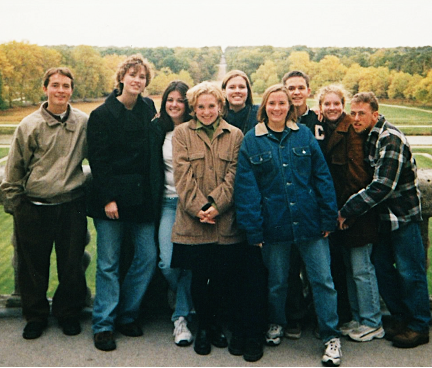
On September 11, 1998, I visited Sainte Chappelle and Notre Dame, and I met with an old friend from the Meridian and Waterford years, Yvette Melby, who was studying in France at the time. I went to the Sorbonne and attended a course on French phonetics and a course on French civilization. In the civilization course we discussed, among other things, the Dreyfus Affair. This became a topic of interest to me about which I researched and wrote later in the semester. Later that day I spent time with my brother Jared, and my friends Rebecca, Julianne, and Katy. I bought a copy of Machiavelli’s The Prince in the original Italian (Il Principe). Then the missionaries invited me to meet with another Italian family that night.
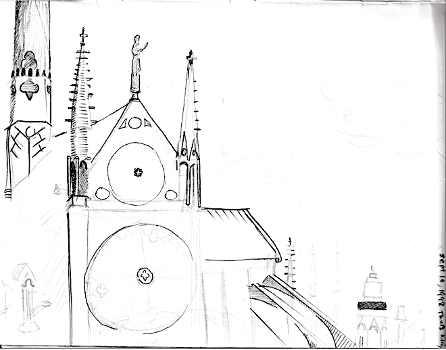
A few days later our group gathered for an evening of activities together. We tied monkey fist knots as symbols of friendship, and we enjoyed each other’s company. Sadly, I noted in my journal that I had a disagreement with my mother over something silly. It seemed to me that living in France was difficult for her. She told me that I would have to learn to understand women. I recorded my thoughts on the matter: “If learning to understand women means fighting for no reason, then I wish to remain in ignorance.” Then I added: “It’s ok. I love my mom.”
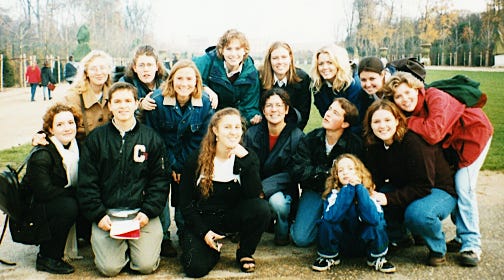
During this time, I kept a separate journal in French. Genevieve Clawson got sick and went to the hospital. I visited her in the hospital, and we had a good conversation and read scriptures together. I also began to write poetry again. I even began to write poetry in French. I wrote a poem or two during my mission, but when I arrived in France and I was surrounded by beautiful new friends (without the same missionary restrictions), I had more new sources of inspiration. I wrote a short poem about my visit with Genevieve:
“Everything is written in a book,
Every thought that flickers in the mind,
The quivering lip, a half-unnoticed look,
Are pieced together, carefully defined.
While thumbing through the pages of the script,
As if to turn a chapter into time,
By free-will the heavy volume slipped,
And toppled down to fill another line.
What unites a writer to the work,
If not the contact of the grain and pen,
Is simply that his offspring will unveil
The fallen book, and open it again.
One may stop to read an empty page,
And watch it fall, fulfilling every age.”
Don’t ask me what the poem means. I don’t know. As Socrates understood, that’s just what poets do sometimes: poets write poems that even they don’t understand.
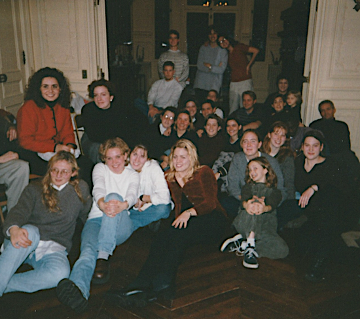
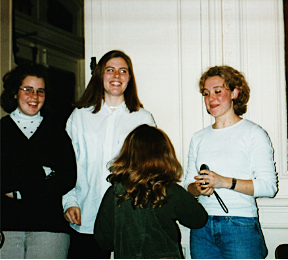
The next week during our group activity (“family home evening”), the ebullient Margaret Nix taught a lesson about learning a foreign language. I noted in my journal: “She’s cute. She gave a powerful little testimony at the end.” In my French journal I noted that I beat her in ping-pong, but that she played very well. During each family home evening we spotlighted someone from our group to get to know him or her better.
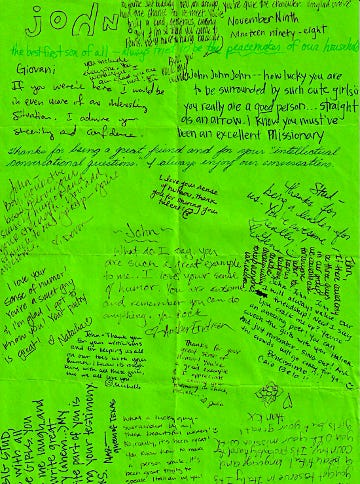
The next day was my twenty-second birthday. My wonderful new friends created a giant birthday card for me. I was surprised, and touched, because of the kind and generous messages that they wrote for me. Laura made me a delicious chocolate cake. The overflowing love and kindness from my friends brought me to tears. I also received a letter from my best friend Matt Brown who was just about to finish his mission in Paraguay.
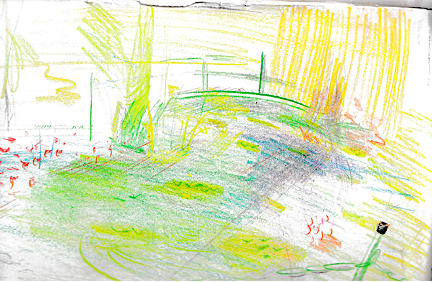
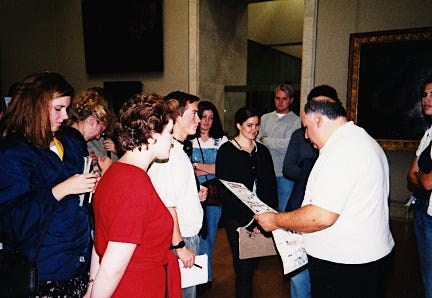
We took advantage of our many opportunities for tourism. We visited the Luxembourg Gardens, the tomb of Napoleon, the Louvre, the Rouen Cathedral, Versailles, and many other sites. We visited Monet’s gardens, in Giverny.
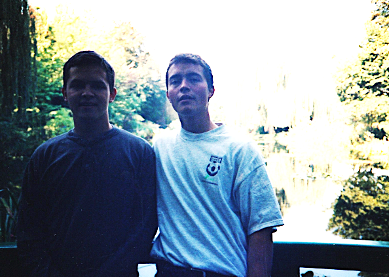
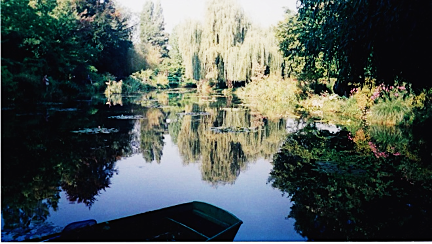
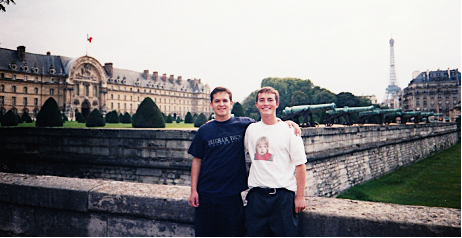
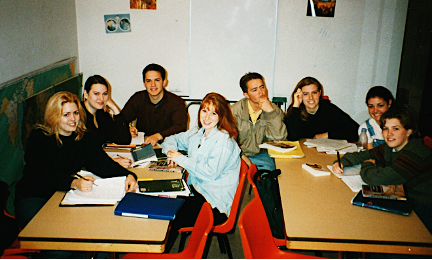
We commenced our studies. I quit my Hebrew class, because I decided to enroll in every BYU class that was available. In the fall of 1998, I took classes on French conversation, French History, European Fine Arts, Modern Western Political Heritage, the LDS Church in a world setting, and a Cultural Survey of Europe. I received straight A grades that semester (another blessing). My father, who was the director of the study abroad program, taught the courses on French History and modern political philosophy, and Christian Euvrard taught the courses on Europe and fine arts. Emilie Harker taught our French conversation course. Each was and is a great teacher.
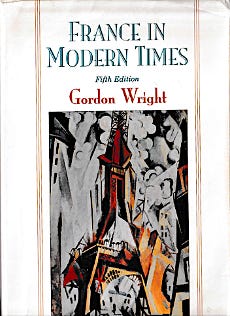
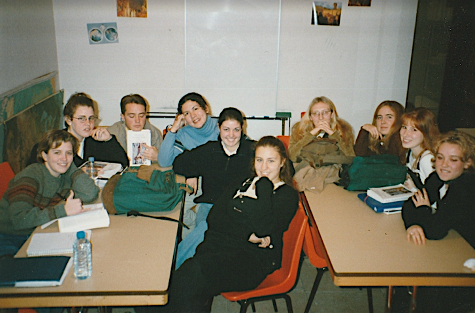
For one of my classes, I studied the poetry of Victor Hugo and Alphonse de Lamartine. I still remember most of one of Lamartine’s poems – Le Lac – that I memorized.
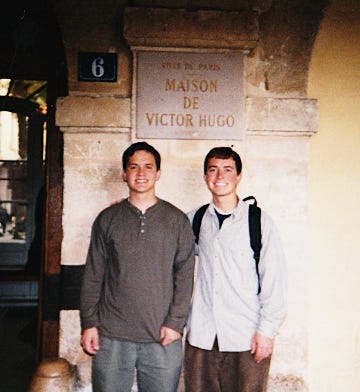
One day Margaret invited me to visit Victor Hugo’s house with her, and I consented. His home was full of drawings because his wife was a talented artist. I noted in my journal that I did something stupid: I didn’t listen to Margaret’s spiritual questions because I was joking around. I thought that she lost confidence in me as a missionary because I was goofing around too much. She told me, however, that she wanted to play tennis with me. She was a very good tennis player too.
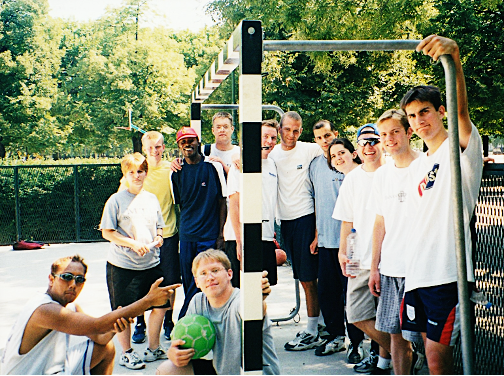
A few of us students played pick-up basketball from time to time on courts that are not far from the Eiffel Tower. I met my friend Alain Thnane there one day. He is a member of the Church of Jesus Christ of Latter-day Saints from Laos who served his mission in Belgium. He spoke both French and English very well, in addition to his own native language. I also met with Anderson and his twin brother Frédéric on occasion for various activities. Once we went to watch the movie The Truman Show. Devon, Natacha, Margaret, and her friend Erika came too.
I went to Nogent (where my parents first met) with my family and we watched the October general conference of the Church of Jesus Christ of Latter-day Saints. I took copious and detailed notes, in French and in English. My journal entry from October 6th is hilarious: “Three months off the mission, and not one date. Keep up the good work.” I later wondered if I could count playing tennis with Margaret as a date.
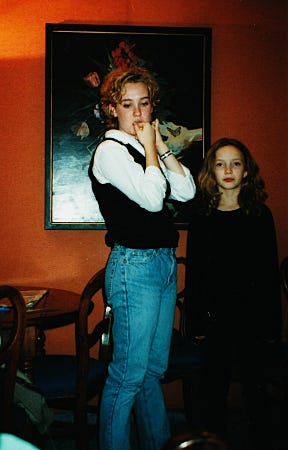
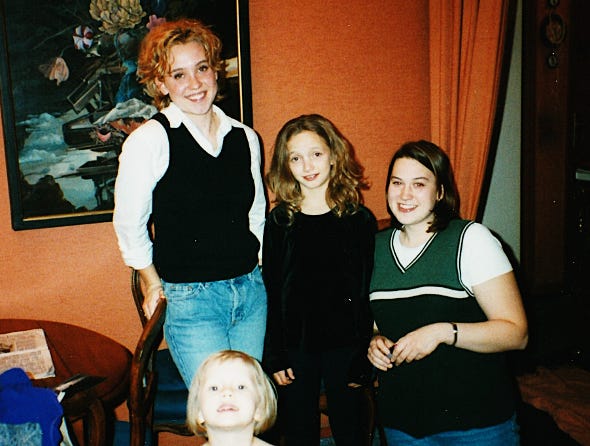
In case you haven’t guessed yet, the young lady who tickled my fancy and inspired my imagination was none other than the lovely Margaret Nix. She was beautiful, spunky, sprightly, and blond. I socialized equally with everyone, but it soon became apparent to everyone that I had a crush on Margaret. One day when she told me that I looked nice, I wrote an entire entry in my journal about how excited I was. By this point in my autobiography it should also be clear what often happens when I have a crush on a girl: I write poetry about her and for her.
“Whither she wandereth, there go I.
Whither she wandereth and ponderth I fly.
I fly in the blink, the blink of an eye,
An eye that seems bashful, most bashful, and shy.
Yes, whither she wandereth, there go I.”
I’ll spare my readers the next five stanzas of my poem. I was twitterpated. We went to a movie together, and to a Rogers and Hammerstein musical. One memorable night Margaret and I went on an excursion to the Champs Elysée. I remember it like it was yesterday. We climbed to the top of the Arc de Triomphe, and I admired her beauty as the breeze tossed her short, wavy blond hair about her face. Everything about that moment seemed calculated to invite me to kiss her. It would have been my first post-mission kiss, but I judged it unwise to begin the semester that way. We returned to our separate homes. I wrote a poem about this experience too and shared it with Margaret later in the semester.
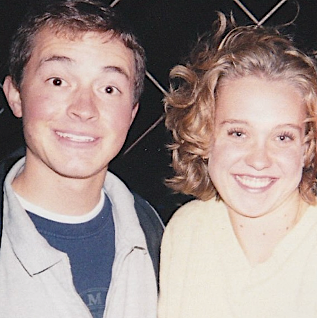
As much as I was attracted to Margaret, I was also very focused on my studies and on serving the Lord. I wrote many other poems and songs for Margaret, and for others, but I also wrote a sonnet on the love of Christ:
“Upon the road to Jericho one day,
A man was beaten and left alone to die.
A priest and Levite passed him on their way,
But another stopped to help the stranger, why?
Seven years a suitor gave his strength,
Then fate of him demanded seven more,
Yet fourteen patient years was no great length
Of time to wait; he waited, but what for?
A woman knelt beside the Savior’s feet,
And bathed them in a true repentant vow,
Her many sins had made her incomplete,
These sins were cleansed through Jesus Christ, but how?
The greatest love that man hath ever known
Is but a glimpse of what the Lord hath shown.”
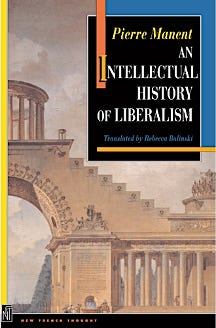
In October I read the Book of Mormon in French (Le Livre de Mormon), Machiavelli’s Il Principe, a book on the Dreyfus Affair, the poetry of Lamartine and Hugo, a book on the history of France, and Pierre Manent’s An Intellectual History of Liberalism. I also began to read about Pascal, and to prepare a presentation on Pascal.
I wish that I would have understood then that, following in my father’s footsteps, I would later delve much deeper into the history of political philosophy. I was young, and in search of a major. I knew that I wanted to read the great books and to obtain a good education, but I hardly understood what liberal education meant, even though my dad had edited an entire book on the topic. I suppose that often the last place we think to look for truth is in the most obvious place, right under our feet.
My friend Julianne Clegg inspired me to consider the major in which she was enrolled, namely comparative literature. I began to investigate the major, and I found it appealing because of the reading lists and the subject matter. But I didn’t settle into a major until after I returned to BYU in Provo, Utah. I also contemplated the study of speech-language pathology and medicine. In essence, I wanted to learn truth and serve people. Which university majors help students to do something like that?
Meanwhile, my brother Jared began to take an interest in the lovely Devon Allison. He continued to write great songs for the guitar, including a song with a male and female part that he sang and played together with Allison. My sisters went to their French schools, and Anne Marie did gymnastics.

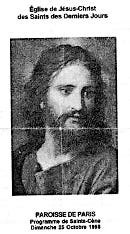
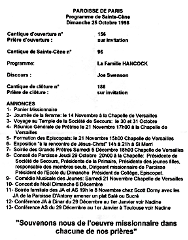
On Sunday, October 25, 1998, my family members and I (except for my mom and Abigail who were at home sick) spoke in church. We spoke on the topic of Brigham Young. Anne Marie gave her talk in French, and she did very well. She spoke about Brigham Young and hard work. Jared spoke next about the Holy Ghost and the teachings of Brigham Young. Jared, my dad, Rebecca, Devon, and I sang the hymn “High on the Mountain Top” in French (“Tout au sommet des monts”).
When I delivered my talk, I was surprised by how well I was able to express myself in French. I told the story about how I got lost while I was looking for Rebecca and Michelle’s house, and how terrible it felt to be lost. I recounted my feelings of relief after I called Rebecca, and she was able to help me find her house. Brigham Young taught that there is no soul that is not worth saving. I shared my testimony about the worth of souls and the importance of rescuing those who are lost or who feel lost. The Lord certainly blessed me with the gift of tongues in that moment.
The next day I woke up thinking about Charles de Gaulle. I don’t know why, but I was still thinking about Charles de Gaulle in the shower, and when I went to the LDS Institute. We took an exam that day, but it had nothing to do with Charles de Gaulle.
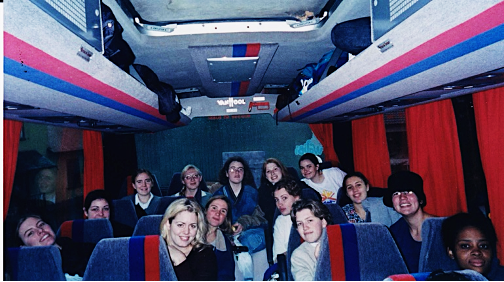
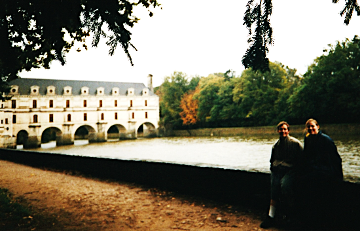
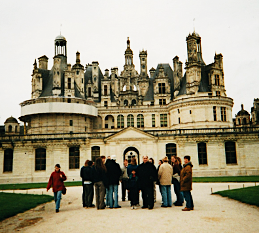
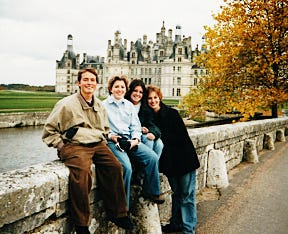
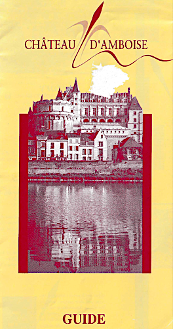
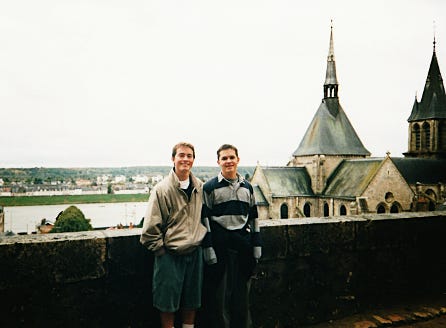
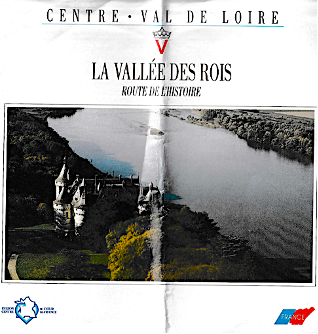
Our group of students visited the Cluny Museum, the Rodin Museum, and the Carnavalet Museum. Not long after that, we gathered at the Centre Pompidou and then boarded a bus for a tour of castles in France. We visited the Chateau de Chantilly, the Chateau of Chambord, the Chateau of Chenonceau, and the Chateau of Amboise among others. We saw many castles.
I sat by Rebecca Sandberg for much of the time, and we became closer friends. I also spoke with Michelle and Monica. We enjoyed singing hymns and songs during the bus ride, sometimes translating popular songs from English into French. Michelle and Monica became close friends, and they also became famous for their song about Mont St. Michel.
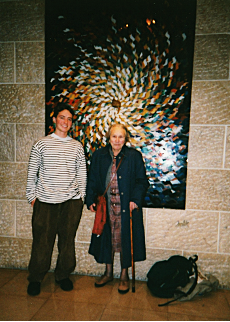
After we returned to Paris, through my contacts at the Alliance Israelite, I arranged to interview an elderly Jewish woman (92 years-old), Madame Martin, who lived in Paris during the Nazi invasions and deportations. Some of the students began to plan a trip to Italy, others planned a trip to Russia, while still others of us planned a trip to Ireland. I taught a crash course on Italian for Monica, Joanna, Emily, Michelle, and Rebecca, just enough so that they could get by in Florence and Venice. Part of me wanted to go with them to Italy, but I decided to join my mother, Margaret, Erika, Suzanne, Sarah, and others on a trip to Ireland. Unfortunately, Jared got sick, and he went to the hospital.
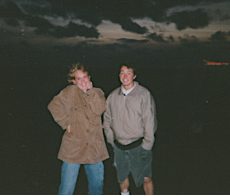
I’m glad that I chose to travel to Ireland, because it was a beautiful and unforgettable experience. We flew into Dublin. One of my most vivid memories is of an elderly Scottish gentleman whom we encountered in the airport. After he gave us directions to the baggage claim, he took one look at Erika and said: “By the way lassie, you’re gorgeous” in the thickest Scottish accent imaginable.
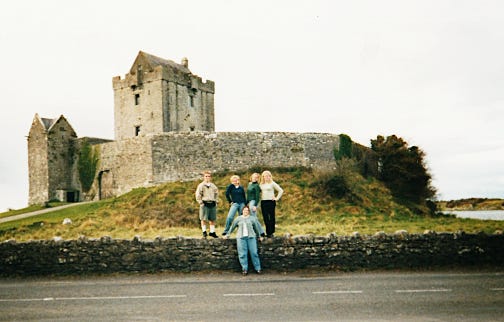
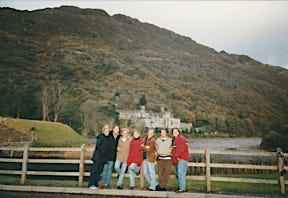
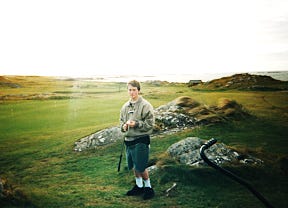
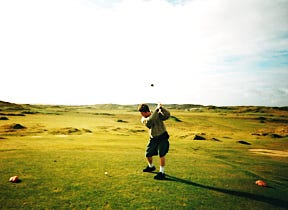
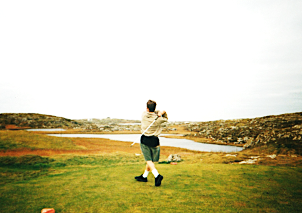
We rented two cars and drove west from Dublin, stopping at a bed and breakfast along the way. We stopped at castles. We visited Kylemore Abbey, and the cliffs of Moher (the famous cliffs of insanity in The Princess Bride). Devon and I golfed on a beautiful golf course by the ocean, the Ballconnely Connemara Golf Club. We were told that President Bill Clinton golfed in Ireland just a short while before we did. (It must be hard work to be a the President of the United States)
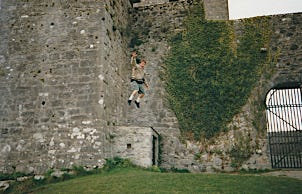
I remember walking and talking with Suzanne on the way to Kylemore Abbey. I remember jumping off castle walls. I remember the other-worldly hue of green Irish grass. I remember the friendly Irish people, and cars that drove on the wrong side of the road. Our trip to Ireland inspired me to read James Joyce’s A Portrait of the Artist As a Young Man.
Still enamored, I wrote another poem in French for Margaret:
“Desormais son sourire est imprimé
Sur les pages du livre de mon âme,
Je ne peux qu’a sa présence penser,
Sans faire allumer en moi une flamme.
C’est comme si j’entrevois la vie d’une ange,
Quand je lis ses actions quotidiennes,
La pureté qui inspire des grandes louanges,
Vient d’elle et ce n’est pas la mienne.
Elle dort comme une enfant de petit âge,
Et sans qu’elle puisse mon regard apercevoir,
Je jete un coup d’oeil sur son visage,
Qui montre la faiblesse de mon pouvoir.
Elle est belle comme le lever du soleil,
Mais je n’ose pas la sortir du sommeil.”
When we all returned from our respective trips, I spoke with Monica for quite some time about her experience in Italy. Monica gave a lesson during our group family home evening based on verses in Isaiah: “For my thoughts are not your thoughts, neither are your ways my ways, saith the Lord. For as the heavens are higher than the earth, so are my aways higher than your ways, and my thoughts than your thoughts.” (Isaiah 55:8-9) Julia’s grandmother passed away. My brother Jared scheduled an appointment for an operation in December. He had appendicitis. I was very worried about his health.
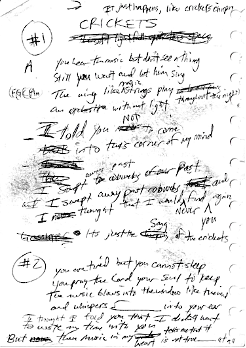
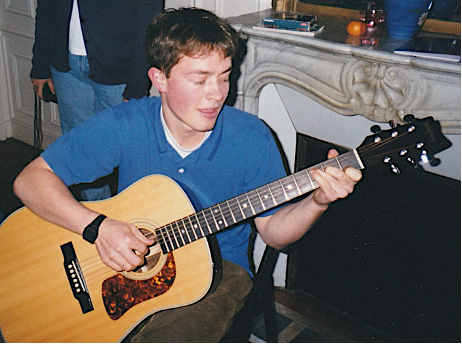
My infatuation with Margaret grew into loving admiration, but I wasn’t sure if such would be reciprocated. I tormented myself a bit about this, but I found relief in poetry and music. I wrote a guitar song for her called “The Song of the Cricket.” Jared also taught me how to play the Beatles’ song “Blackbird.”
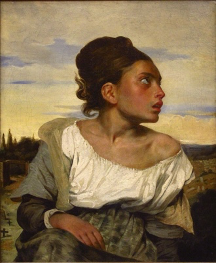
By this time, I knew my way around Paris quite well because of the metro system. Our group visited Versailles again. The next day I went to the Louvre with Monica Merced and Emily Nolte. I studied the artwork of Eugène Delacroix. I was especially haunted by his beautiful painting Orphan Girl at the Cemetery.
Afterwards we bought some pasta and vegetables and we cooked at their house. We ate. We talked for a couple of hours. In my journal I recorded some of my profound thoughts about love: “Love is that which people who dislike hatred must feel, right?”
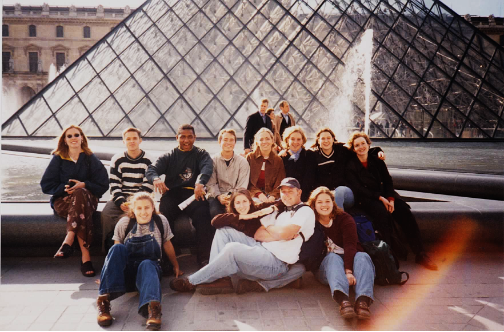
Amber and Suzanne invited their Nigerian friend to church that Sunday. After church, I helped my friends to prepare a surprise birthday party for my mom and dad who turned 44 and 47 respectively. It’s amazing to think that my parents were that young, practically the same age that I am now as I write my autobiography.
My French teacher from Meridian, Madame Welch, informed me that she reserved a spot for me in the French House in the Foreign Language Housing at BYU for the next semester. This was an answer to my prayers, and I was very grateful for it. In our political philosophy class with my dad, we discussed Rousseau and the state of nature. What is man in the state of nature? It was an interesting question to me then, but I understand better now why there’s really no such thing as Rousseau’s imaginary state of nature.
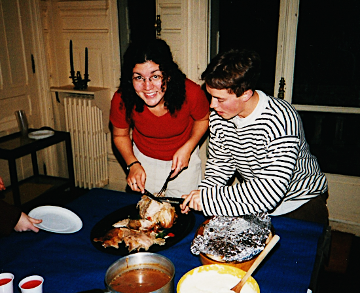
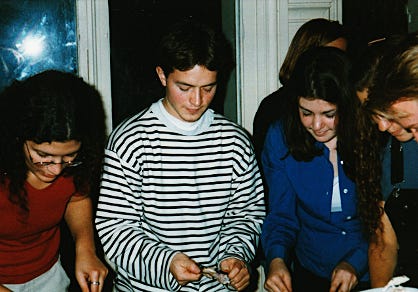
We had a wonderful Thanksgiving dinner together with the entire group, but I got sick for a short time in late November of 1998. My journal entry on my brief illness caused me to reflect on the blessing of how remarkably healthy I had been for most of my life up to that time. Good health was a blessing, among so many others, that was too easy for me to take for granted.
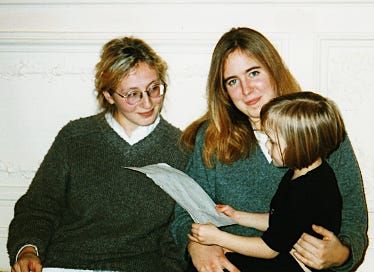
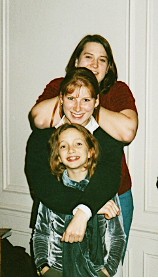
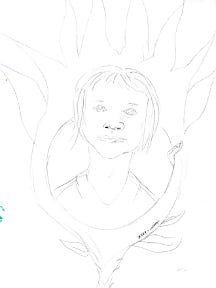
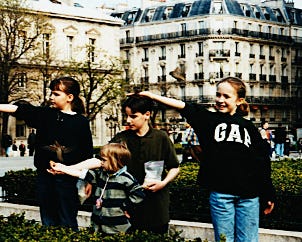
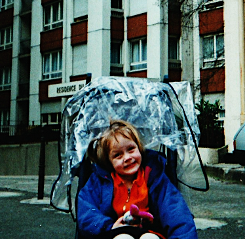
The students loved to spend time with Anne Marie and especially with little Abigail. She was so cute that Margaret called her “cabbage” – because of the endearing French term “petit chou chou.” One day Abby asked me several questions about the Resurrection of Jesus Christ and other related topics. I noted in my journal that she said the sweetest prayer to bless her cereal. I also noted that she always prayed for Heavenly Father to bless Jesus. Why not? Ought not we all to bless Jesus every day? She prayed for Nathaniel to finish his mission soon. I am grateful for those sweet prayers.
At the end of November, we all took the TGV (the high-speed train) from Paris to Marseilles. Suzanne, Rebecca, Annie, Abby, and I ate at McDonalds. Then we went to Nice. Jared, Greg, and I shared a room. In Nice we met an interesting lady named “Ultra-Violet” who had been a friend of Salvador Dali and Andy Warhol. If I recall correctly, we visited her house, and she told us some things about her experiences with them. We visited a Marc Chagall art museum in Nice. We also visited the Matisse Museum and the Museum of Modern Art.
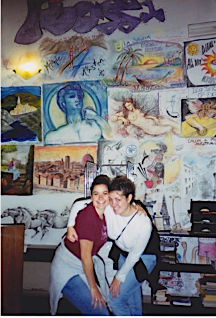
One evening Suzanne Squires and I went down to the beach. We weren’t supposed to go swimming, but I wanted to at least put my feet into the ocean. I stripped down to my shorts and jumped in. Just as I returned to the beach after wading in the water, a giant wave rapidly approached. Suzanne and I ran up the beach and it crashed right behind us.
My cousin Dan Higginson (Danny, the eldest son of my uncle Rob Higginson, my mom’s youngest brother) was serving as a missionary for the Church of Jesus Christ of Latter-day Saints in the Marseilles mission at the same time. He came with us to Monte Carlo. We visited the Rothschild mansion. This was long before I learned what the Rothschilds had been up to in books such as G. Edward Griffin’s The Creature from Jekyll Island.
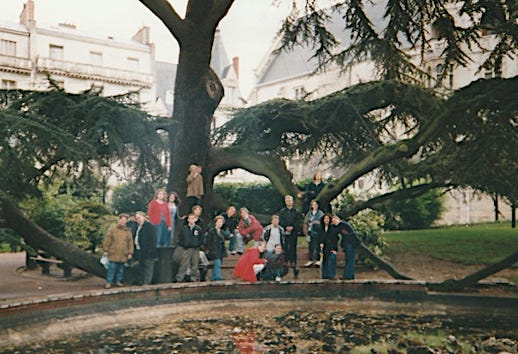
Soon after that, we returned to Paris to finish the semester. It was a glorious time. I enjoyed missionary work in France, my classes, touring the country, and especially my new friendships. We had a lifetime of great experiences together that were packed into one semester. By the time that I left France, I made sure to reveal more of my feelings for Margaret. It was already obvious that I liked her, but I was hoping to find out, once we returned to the United States, if our friendship might blossom into something greater.
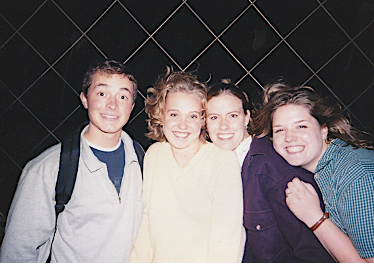
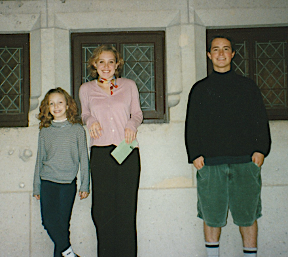
I spent Christmas with my family. My family remained in France for a time, Nathaniel as a missionary, and the rest with my parents as my father continued his work there. I had honorably completed my mission in Italy, and my extended mission in France, and I was ready to return to the United States to continue my studies at Brigham Young University in Provo, Utah. My father and Anne Marie accompanied me to the airport. I met an Italian man on the plane, and I shared my testimony and a copy of “The Family: A Proclamation to the World” with him. It was just like the Church film: Labor of Love.
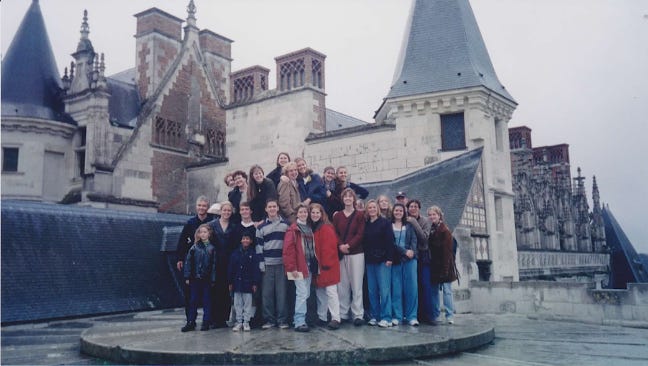
When I think of Paris and France I think of joy, of reuniting with my family, studying French, Hebrew, literature, poetry, art, philosophy, and religion. I think of the lights at night, the amazing castles, monuments, gardens, beaches, cathedrals, and museums. I think of friendship and love. I think of kindness, service, sharing the Gospel, and gratitude. When I think of Paris, I think of my father’s mission, my brother’s mission, and my extended mission.
When I think of Paris, je rêve.