Chapter Eleven
Let Your Light So Shine: Beginning Adventures in the Holy Land

If you enjoy, benefit from, or learn something new in these chapters, please consider making a donation to at least one or more of the following fundraisers (which I explain further in my autobiography), or directly to my Venmo. Thank you.
Chapter 11. Let Your Light So Shine: Beginning Adventures in the Holy Land
At this point in my narrative, I hope that there are already elements of my story that may be helpful to many people. But even if my autobiography helps just one person, that is a good start.
In this narrative of my early life, besides sharing my faith in and love for Jesus Christ and His Gospel and His Church that were restored through the Prophet Joseph Smith, I hope to point my readers to answers to difficult questions, such as:
What is the truth about psychiatry, mental illness, and the mental health industry?
What is political philosophy, and the history of political philosophy, and why does it matter?
What are the real conspiracies, or secret combinations, that infest our communities, states, and nations, and how can we identify and eliminate them?
In the preceding pages, I’ve laid the foundations for answering these difficult questions. Along the way, I’ve recounted what it is like to grow up as a Mormon (a member of the Church of Jesus Christ of Latter-day Saints). I’ve shared where I come from and what my childhood and adolescent experiences were, what it meant to me to serve as a Mormon missionary (a missionary for the Church of Jesus Christ of Latter-day Saints) in southern Italy, and what it is like to fall in love in Paris, to study at and graduate from Brigham Young University, and to wrestle against the nefarious forces of psychiatry.
In the following chapters, I will further unfold the truth about psychiatry, mental illness, and the mental health industry, and I will further demonstrate what political philosophy, and the history of political philosophy are, and why they matter. As for real conspiracies and secret combinations, I will further expose them to those with eyes to see and ears to hear.
In addition to providing answers to these questions, the ensuing chapters will shed light on the answers to questions such as:
Is it safe to travel to the Holy Land?
What is it like to be a single Mormon man (a single man in the Church of Jesus Christ of Latter-day Saints)?
What is it like to study politics at Hillsdale College in Michigan?
Is Brigham Young University the Lord’s University?
What is it like to work for corrupt institutions, including multi-level marketing companies, a university think tank, and a cult that masquerades as a business?
By the end of this book you will know almost as much about me as the NSA, the CIA, and the FBI do. Nevertheless, the Prophet Joseph Smith’s seemingly cryptic declaration resonates with me even as I attempt to articulate the truth about my experiences:
“You don’t know me; you never knew my heart. No man knows my history. I cannot tell it: I shall never undertake it. I don’t blame any one for not believing my history. If I had not experienced what I have, I would not have believed it myself.”
In spite of this declaration, Joseph Smith recorded many things and shared brief accounts of his miraculous experiences. His mother also recorded a wonderful history of her son whom she surely knew better than most.
Unlike Joseph Smith, I can tell a portion of my story, and I will continue to undertake the telling thereof. My account is true, and I probably would not have believed it myself if I had not experienced what I have. And this, in my opinion, is where my story becomes even more interesting as I prepared for and travelled to the Holy Land for the first time.
I spent the New Year (2004) with Rebecca Sandberg. We went to California. I spent some time there with Suzanne Squires as well. Rebecca and I did the polar plunge, jumping into the cold water of the Pacific Ocean to inaugurate the new year. I bought a Quicksilver T-shirt for Annie and a Sponge Bob T-shirt for Abby.
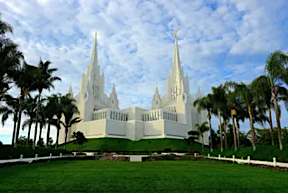
Rebecca and I went to the L.A. Temple visitors center. We drove to San Diego (where my brother Jared served his mission) in a rental car. We visited the San Diego Temple, and then we visited my cousins Lela and Rob Vickery, and their children Alex, Michael, and Quinn. Lela is the eldest daughter of my mother’s eldest brother George. Rob and I and a couple of others went to see The Lord of the Rings: The Return of the King. Later Rebecca and I rode bikes by the beach.
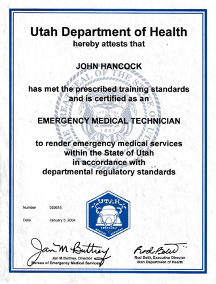
I passed my EMT test, and I became certified as an EMT. I even thought about going to medical school in Israel. But after a conversation with my parents about my plans for medical school, I decided to withdraw from my classes for that semester and to look for a new job. I was still interested in medicine, and a career in medicine, but I wanted to work for a while before resuming my classes. I continued to play soccer with my British friends, and to play basketball with Jared and others, including my Waterford friends. My dad was called to be the bishop of the Pleasant View 2nd ward in Provo, Utah.
I took Immaculate Kyosaba on a drive to Squaw Peak, and we spent some time together. I was very attracted to her, but when I tried to give her a kiss, she just put her head on my shoulder. That was sweet. There had been very little kissing in my life for quite some time, however, a few days later, Rebecca and I had a heart-to-heart conversation, and we kissed. That was also sweet. We had a talk soon thereafter in which we figured out that although we loved each other, and although we had many spiritual affinities, we would not pursue a relationship together. She was interested in other men, and I thought that her roommate Mary was cute. I asked for a father’s blessing after that, and the blessing brought me peace regarding many things.
On January 1, 2004, I signed up with my first online dating profiles on LDS Planet and LDS Singles. My real dating life must have been bad enough to push me to consider online dating, but I enjoyed spending time with my friends Rebecca Sandberg and Jennifer Trapp. I also enjoyed spending time with my sisters. I recorded in my journal:
“Yesterday I went on a ‘date’ with Abigail to Wendy’s. We got Frosties and then we went to the ward co-ed soccer game. Abby is so cute and sweet. Annie has opened up to me a lot lately. She can be so sweet. We just need soft hearts.”
I asked Rebecca’s roommate Mary Haddock on a date. While I was getting my haircut, the girl who cut my hair told me that her first date with the man who became her husband was a bowling date. That conversation sparked some ideas. I went to the thrift store, and I bought two bowling balls with bowling bags and two bowling jackets (I spent $12). I created a couple of bowling trophies out of tinfoil. I took Mary to Jacinto’s for dinner, and we saw Annie as she was working there. Then Mary and I went bowling at Fat Cats with glowing lanes. After bowling, we went back to her house to watch a movie. I rented the movie Eight-Legged Freaks, because I knew that Mary was afraid of spiders (and I wondered in my journal why I was still single).
Matt Brown and I played on an intramural basketball team with my dad and some other faculty, a team called “The Wise.” During one game an opposing player plowed into me and cracked his thick skull into the side of my head and almost knocked me unconscious. I came back for the end of the game, and I made a spectacular half-court shot off the glass to win the game.
In February 2004, my American Heritage and Meridian friend Joseph Wood called me out of the blue. He said that he had been thinking about me and that he just wanted to talk to me and to express his love for me as his friend. That was a very kind and thoughtful thing for him to do. I was grateful.
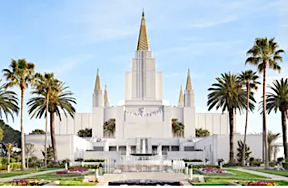
I flew out to Oakland for Matt and Melissa’s wedding in the Oakland Temple. Nathaniel picked me up from the Oakland airport and we went together to the Temple. It was great to see Matt and Melissa on their special day, and to see many other friends as well. It was a beautiful and meaningful ceremony, and Matt and Melissa were very happy.
After the wedding, I travelled with Nathaniel to Monterrey, California. I met Nathaniel’s friends, and he showed me around the school. He showed me the French pastry shop where he worked. He showed me the library. We drove along the coast near Pebble Beach.
We ate lunch at a French restaurant, and then I went to Nathaniel’s soccer match. We went to a party, and I met more interesting people. I spoke with one of the girls, Marjorie Gelin, about the Church, and I invited her to church. The next day I went to church with Nathaniel, and then we watched the NBA All-Star Game. The day after that, brother Bob Jensen gave me a ride to the airport in his Porsche Boxter. Jennifer Trapp picked me up at the Salt Lake City airport and we went to Macaroni Grill for dinner.
Jared and Lucinda had their first baby, a son whom they named Calvin Whitaker Hancock. Calvin recently returned from a Chinese speaking mission for the Church of Jesus Christ of Latter-day Saint, a mission that he began in 2022. For his homecoming, my parents, Jared’s family, Dianne and David Seckler and their two children, Nathan and Sam, a friend, and me went to Brick Oven for a pizza dinner, and it was great to hear Calvin share his mission experiences and exhibit his amazing Chinese speaking skills. He is a great young man.
I started a new job at NuSkin, the same job that Nathaniel had done before, in the French-Canadian department. I enjoyed working with my manager Mike Anderson. I worked at NuSkin from 8 am to 2 pm each day. During this time period I went with Paul and Anna Lisa Rosenvall to a Lionel Richie concert. Meanwhile, Nathaniel received an internship to work in Lyon, France.
One night I went to an LDS Institute class taught by Sister Hawkes. I recorded in my journal:
“The most valuable lesson I learned tonight filled me with peace and drew tears from my lonely eyes. At the end of the lesson Sister Hawkes shared her testimony of Christ accepting the people one by one – thousands of people. I felt a strange, consuming peace overcome my body and my spirit. My worries and nervousness melted away. I left like I was in the arms of Jesus, and He answered my prayer. He loves me. Not only that, but His love filled me, and I knew that I loved Him and my fellow man. As I rested in the spiritual arms of my Savior, I wanted so much to please Him, and to be the best Johnny that I can be. I wanted so much to be with Him. I still have a lot of questions, but I know better which questions are most important, and I know that God will answer me if I ask in faith.”
It is an answer to my prayers again, even as I record this experience. I went to see Mel Gibson’s The Passion of the Christ with Rebecca. It helped me to consider different aspects of the Atonement of Jesus Christ. I went to see it again a couple of months later with my brother Jared.
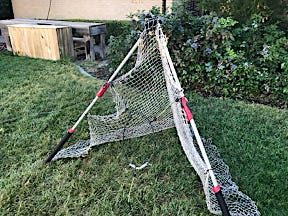
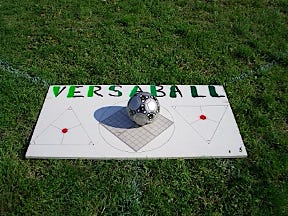
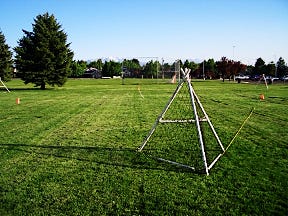
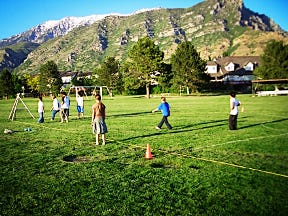
On March 6, 2004, I organized a Verseball match at the field near Centennial Middle School. Abby, Zoe, Nathan, and Ezra helped me to set up the field, and Jared joined us so that we could play two on two on two. About a week later, I organized a Verseball match for a singles ward activity. My dad, Abby, Nathan, and Jared helped me to set it up. I read Charles Dickens’ Great Expectations at the time. It is a great book. I soon learned that Nathaniel was ready to marry his girlfriend, Felicity.
While I worked at NuSkin, played sports, and organized Verseball matches, I also applied to a graduate program in Jewish Studies and Hebrew at the Hebrew University in Jerusalem. I was doubtful whether I should go. I did not have any marriage prospects at the time, and I knew that it would be even harder to find a wife in Israel. Nevertheless, after much pondering and prayer, including meditation in the House of the Lord, I received an answer:
“A singular experience, I have my answer. Israel is in my heart. I love the Jewish people. They are my brothers and sisters… I walked into the living room. With the soft sound of Hebrew dialogue playing in the background, I saw a row of books about Israel and the Jews that my mom had laid out for me. I had tears in my eyes, and the Spirit of God swept over me, much like it did when I received my call to serve a mission in Italy. It was a feeling of great love for a people I hardly know, like my love for the Italians, as well as the French. I loved them before I knew them. With the problems that I will most certainly confront, this is the answer that I needed. It is certainly an answer in the affirmative, and I can be assured that the Lord approved, and approves, my desire.”
Soon thereafter, I met a beautiful young lady named Nicole Ferguson. We went to a BYU volleyball game and then to dinner at La Dolce Vita Italian restaurant. Afterward she came to my house to play games and watch Pride and Prejudice. She liked to play Scrabble, and so did I. She was good at Scrabble, and so was I. She was preparing to go to law school. We discussed Tocqueville and logic in scripture. In retrospect, I’m amazed that Nicole somehow knew the fastest ways to my heart: sports, Italian food, Jane Austen, Scrabble, Tocqueville, and scripture study.
The next day she and I went to a Switchfoot concert. She came to my basketball game with “The Wise” team. She and I hiked to the top of the “Y” and listened to general conference while we had a picnic. The day after that I went to her house, and we had dinner together. We kissed, and our kissing quickly escalated and became more passionate. I told her that I wanted to slow down a little bit.
A couple of days later I recorded in my journal:
“Nicole is my girlfriend, and I am her boyfriend. I have a feeling that it won’t last long, but I will enjoy it while I can.” Naturally, I wrote a poem about her, using each letter in the alphabet:
“A bright burst of charismatic dreams,
Ebullient fecundity in her gleams,
Healthy, in jocundity, kindly, she laughs,
Merrily she notices on my behalf,
Positive qualities and rare sweetness,
Truly unselfish, virtues with completeness,
Extraordinary, youthful, zealous, and real,
There aren’t enough letters to describe how I feel.”
Annie had a boyfriend named Josué. She went to the Timpview prom with him. She and Abby got another little dog named Dexter. One time Dexter ran away, and Nathan Seckler finally found him near the Lopez’s house.
I went to the Temple, the House of the Lord, with Jared, and then we went out to eat at El Azteca restaurant with Lucinda and Calvin. I miss El Azteca. That was one of my favorite Mexican restaurants. The food was nutritious, delicious, and cheap. Jared generously paid for my carne asada and horchata. Thank you, Jared. I played tennis with my dad. I helped Matt and Melissa move into their new apartment at Wyview.
On Thursday, April 29, 2004, my mother was involved in a terrible car accident. An 18-year-old was speeding in a fancy car, ran a red light, and broadsided my mom in the white “boat” car. It was traumatic for her. She was injured, but she was able to return home safely. She had just dropped off my dad at the airport. My dad went to Boston for a special conference with Harvey Mansfield, Dan Mahoney, Peter Lawler, and other great minds.
I read Dostoyevsky’s The Brothers Karamazov while working at NuSkin. It is a great book. Like Manzoni’s The Betrothed (I Promessi Sposi), The Brother’s Karamazov is one of my favorite novels.
When Ben Lonsdale graduated from the University of Utah, I went to Salt Lake City to celebrate his graduation. My lovely mission friend from the MTC, Amy Livingston came with me. We went to dinner at the California Pizza Kitchen. Sam and Danielle came too. Troy and Kirsten were in Boston for medical school. Nathaniel prepared to go to Lyon, France. My aunt Dianne and Uncle David prepared to move to Tel Aviv, Israel.
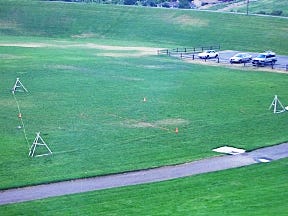
On May 8, 2004, with the help of Rebecca and her friends, I set up Verseball in Rock Canyon Park. Many people came to play, and there were even more spectators. A week later I went to Salt Lake City to visit Hanni, Marty, and Heather. It was good to see them again.
In my journal I composed a short poem entitled “Laughter”:
“From a baby’s first smile to an elderly grin,
Happiness starts where laughter begins,
Perhaps laughter is only an offshoot of joy,
And smiles are for sharing, as a child shares a toy.
Perhaps sorrow and suffering are part of the plan,
But to have joy – this is the purpose of man.
And while we are joyful, we’ll smile and we’ll laugh,
Or else we are living life by just half.
Risible, laughable, chortle, and chuckle,
Guffaw and crack-up like an arthritic knuckle,
However you can, show forth your contentment,
Laugh away sadness, anger, resentment.
And while you are laughing, laugh at yourself,
Because this kind of laughter is good for your healf.”
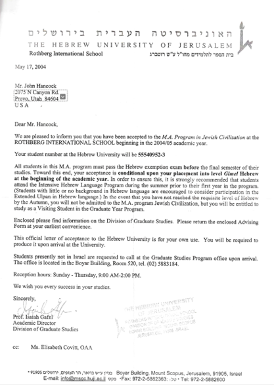
On May 24, 2004, I received a letter from the Hebrew University of Jerusalem Rothberg International School. I was accepted, along with a $6,200 grant, to study in the Jewish Civilization program (a master’s degree) in Jerusalem. I was very excited for the opportunity, especially after the BYU program had been cancelled a year or so earlier. My dream to study in Israel was finally becoming a reality.
I moved into a small apartment in the Cinnamon Tree apartment complex in Provo. Paul Rosenvall and I played tennis together, and then he helped me to set up the internet on my laptop computer. (In the olden days, it took a lot of work to set up the internet, and Paul was good at all kinds of construction, mechanical, and electronic things.) Robert Ricks and I lifted weights together and discussed the Middle East, and our callings in life, or life missions. I was called as a counselor in the Sunday school presidency in my ward.
On June 18, 2004, we held a Higginson reunion in the condominiums on north Canyon Road. I prepared for Israel and gathered contacts from people who had been to Israel, people like Matthew Holland, son of Elder Jeffrey R. Holland, and Jim Kearl, a professor at BYU. I felt drawn to Israel.
The next day, Abby’s birthday, June 19, I completed cleaning checks for my apartment, lifted weights at Gold’s gym, and then went to the Mount Timpanogos Temple with my mission friend Amy Livingston. I got Abby a Sonic the Hedgehog movie for her birthday. Anne Marie started working at Tortilla Flats with her friend Hannah Lopez. My dad went to Seattle.
My Meridian friend, Ann Sumption, began working with me at NuSkin in the French-Canadian department. At the end of June 2004, I went to my friend Paul Andrus’ cabin with some other friends. We drove four-wheelers. At church that Sunday I gave a talk about Zion. My friend Kim Shumway gave an excellent talk about Emma Smith.
I finished reading Dostoyevsky’s The Brothers Karamazov. I read C.S. Lewis’ Surprised by Joy. I played tennis and spent time with Paul Rosenvall, discussing all kinds of things. I went to Moab with Kim Shumway. My dad and I lit off fireworks for the 4th of July and Annie, and then Abby, almost got hit by cars.
I met Truman G. Madsen, and I visited the Madsen’s again to talk with them about Israel. On July 17, 2004, I went to East Canyon Lake to ski, wakeboard, and test out our new wave runner. Anne Marie was good at water sports. I struggled to get up on the wakeboard, but finally succeeded. Uncle Jerry Higginson drove his boat. After a morning at the lake, there was a ward picnic. Annie and Hannah helped me to set up Verseball, and it was a big success.
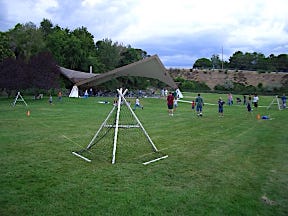
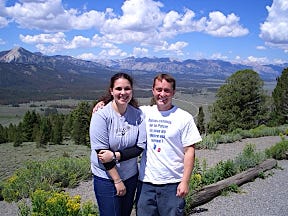
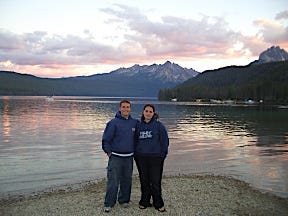
At the end of July 2004, I went to Red Fish Lake again with my family. Silvia Ascione, daughter of my mission presidents Giovanni and Anna Maria Ascione, came with us. I took Silvia out for a ride on the wave runner. I swerved around a lot and did tricks until we both flew off the machine into the water. Silvia lost her bracelet, and I felt bad.
Later, when I was in Israel later, I sent Sylvia a new necklace with her name written in Hebrew. At the Red Fish Lake camp site we captured chipmunks and then let them go. Annie and Hannah caught a lot of fish, and we ate some of them. After Red Fish Lake, we went to Twin Falls to spend more time with the Browns.
On July 28, 2004, I had an interesting dream:
“I was in a hotel or a high-rise building. I took the crowded elevator to the 72nd floor. I was seated at a large table, and a man entered the room. There was a meeting in progress. The man was a general authority or a seventy, and his whole countenance and person shone with pure light. His presence was like that of Jesus, both inspiring and somewhat frightening. He sat down next to me. He spoke during the meeting. I had a book next to me that we looked at. He brought the Spirit to the meeting, and at the end he left immediately, almost disappeared. After he left, I noticed that he had written a couple of things in my book. The first thing that he had written was a note of thanks, congratulating me on all the small, imperceptible, good things I had done, things known only to God. It made me feel good, and that the Lord was pleased with my secret prayers and my secret efforts for the kingdom of God.
The second message was also kind and uplifting, with a word of counsel and doctrine. The man reminded me simply that ‘This work is done in pairs.’ He explained that it was the Lord’s plan for a man and his wife to work together toward salvation, and he seemed to promise me that soon this blessing would arrive, and that I would be able to help with the Lord’s work in two, in a couple, with my wife. In other words, the Lord knows of my desire to do His work, and He will provide me with a choice companion. Strange how real and meaningful this simple dream was to me.”
Nevertheless, for some reason, my relationship with Nicole was short-lived. Gratefully, my aunt Helen introduced me to a beautiful girl named Fressia Whitehead, and we went on a date or two. But we just wanted to be friends. The day after my dream about doing the Lord’s work two by two, my Visa and passport arrived. I was ready to go to Israel.
I had dreamt about traveling to Israel ever since my youth. At American Heritage School I wrote my country report on Israel. While I was at BYU, I studied Judaism and the Gospel and Isaiah. I also later audited a class on Jerusalem at BYU, based on the excellent book Jerusalem: The Eternal City, by David B. Galbraith, D. Kelly Ogden, and Andrew C. Skinner.
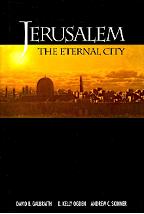
I had considered applying to medical school in Israel, and my aunt Dianne was ready to support me in that decision. But I struggled in my post-baccalaureate science classes and in my efforts to learn about the medical profession. I knew that good doctors were indispensable for helping me to heal from three different broken bones, several cuts and lacerations, a torn anterior cruciate ligament, and a variety of other injuries. I was also very interested in the work of ophthalmologists and optometrists who were helpful as I explored their work. But I learned through my experiences with my family doctor and then several psychiatrists that something wasn’t quite right in the field of medicine. My suspicions about the field of medicine increased through my interactions with my associates in the pre-med track at BYU. In short, I was still interested in medicine, but I was also skeptical of medicine. I was more interested in traveling to Israel.
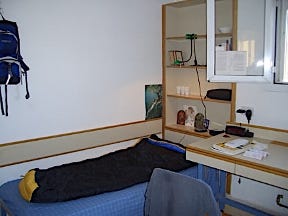
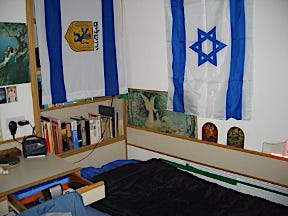
I arrived in Israel early in August 2004. On the way to Tel Aviv, I stayed in New York for a day where Matt and Melissa Brown had moved for Matt’s internship. In Jerusalem, I moved into a small apartment on French Hill in the Idelson dormitories. On Friday, August 13, I recorded in my journal:
“The life of this country permeates my soul. The wall, the Jerusalem Center, Hebrew, Arabic, Bethlehem, the Dome of the Rock, the old city. I have felt great peace while living here, and I know I am in the right place, however absurd or dangerous it may appear at this time… I’m happy to be here, and optimistic for what these two years as a graduate student have in store… great things, I’m sure.”
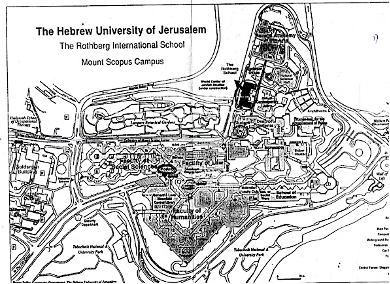
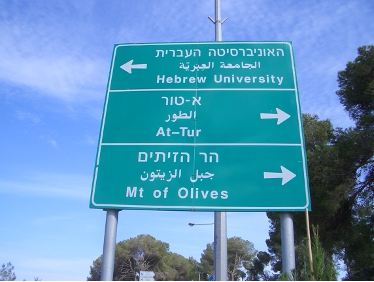
I immersed myself in the Hebrew language. Anat and Tamar were my Hebrew teachers in the Ulpan. My roommate was a twenty-year-old Jewish boy from Texas named Jonathan Jamison. Matthew Burroughs and Torin Schaafsma also lived in the apartment.
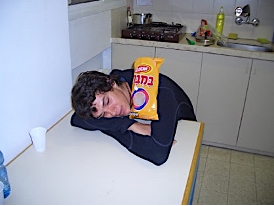
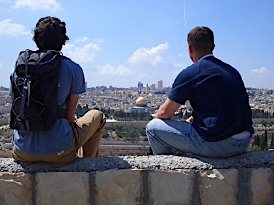
I met Steve and Josh Rona, and soon thereafter, I met the intrepid Nathan Hamilton, a young man from Canada who had just turned twenty-six. To my knowledge, Nathan was the only other LDS student at the Hebrew University at the time.
Nathan and I went to dinner with the senior missionaries, the Pattersons, and Brother Bob Patterson showed us around the BYU Jerusalem Center. Then he and Sister Patterson took Nathan and I for a drive around West Jerusalem. They invited us to come with them to Tiberius in a week. It’s almost as though the Lord arranged for Nathan Hamilton and me to be undercover, non-proselyting, LDS missionary companions in Israel.
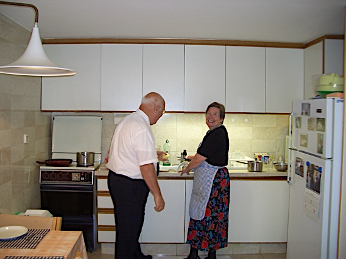
Nathan and I attended a Shabbat dinner with the Machles family and about 50 other guests. We sat in the back of the room, sandwiched in between soldiers, French Jews, and an assortment of rabbinical authorities, Ashkenazi and Sephardic. The dinner was delicious, and the challah bread was humongous. There was much sabbath rejoicing and celebration.
Rabbis and others gave brief speeches. Rabbi Machles spoke about Israel, the Jewish homeland. He spoke of the Torah, and the comparison of the Jews and Israel to the bride of the bridegroom. He compared the unity of Israel to the unity between a bride and a groom. I felt that I was witnessing the gathering and restoration of the Jews to their homeland in real time.
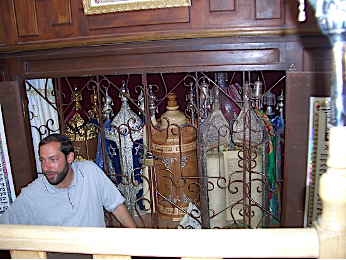
I worked hard in my Hebrew classes, and I worked out and played tennis, soccer, and basketball at the recreation center that was close to the dormitories. I was eager to see more sites in the city, but I was especially eager to visit Gethsemane, Golgotha, and the Garden Tomb. I knew that it was more important to walk as Jesus walked than to walk where Jesus walked, but I wanted to do both.
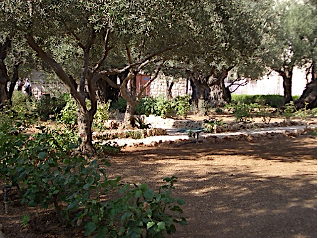
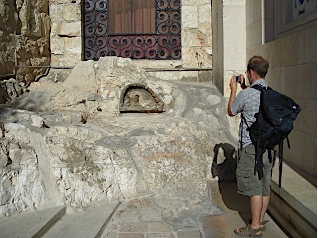
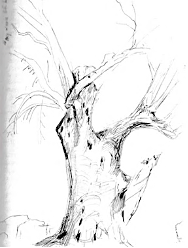
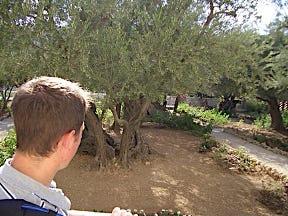
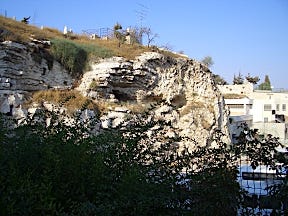
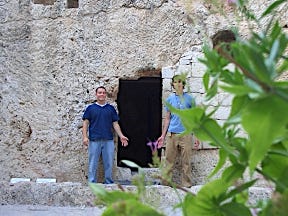
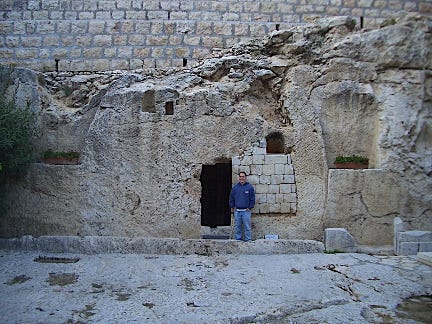
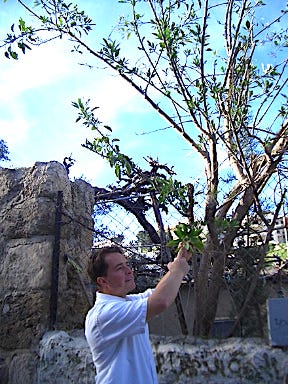
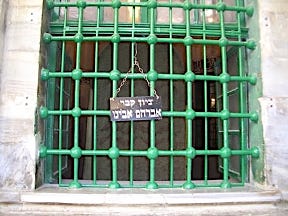
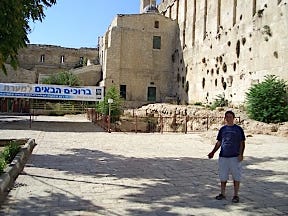
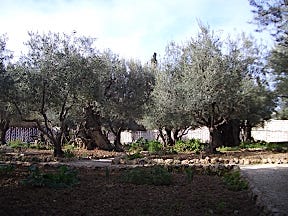
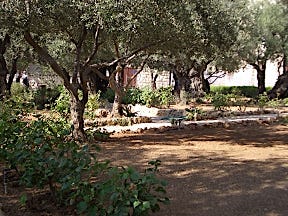
On August 17, 2004, Nathan and I visited Hebron with friends. We visited the tombs of Abraham, Isaac, and Jacob and their wives. On August 18th, Nathan and I went on an excursion together on foot from the university campus to the Church of the Ascension to look out points on the Mount of Olives and then descended toward Gethsemane. We entered the enclosed sections of the Garden, and a priest on the premises cut off small branches from the olive trees to give to us. I was impressed that Gethsemane was a small garden. I also noted in my journal: “My stomach hurts after taking the Lithium pills tonight.” Nathan and I continued through Damascus Gate into the Old City to visit the different quarters. We exited the Old City and walked through Arab neighborhoods.
On August 21, we went to the Sea of Galilee, and we hiked through hills by a fresh mountain stream. During the hike, I felt sick to my stomach, and I had to relieve myself behind a bush. After that we visited the Golan Heights, and then we returned to French Hill.
Nathan and I were given strict and specific instructions from LDS Church leaders about proselyting in Israel. We were told that proselyting is prohibited in Israel, and that we were not allowed to talk about the Church. If anyone inquired about the Church, we could simply explain that we were not allowed to share information about the Church. We followed that counsel.
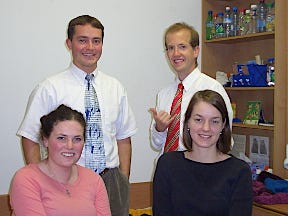
On August 25, Nathan and I toured Hezekiah’s tunnels. Every day in Jerusalem was a new and exciting adventure. Nathan informed me that a female LDS student would soon arrive at the Hebrew University of Jerusalem. We joked that we would have to fight a duel over her. (How appropriate for a Hamilton to suggest a duel) I admit that I thought that perhaps the Lord would send me a girlfriend because I was sincerely striving to do the Lord’s will in my life. When Mindy Anderson arrived, Nathan and I discovered that she already had a boyfriend. We became good friends anyhow, and we had many great adventures together.
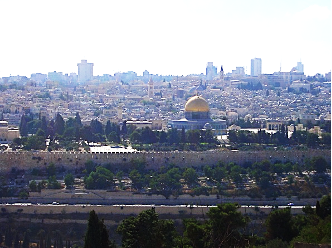
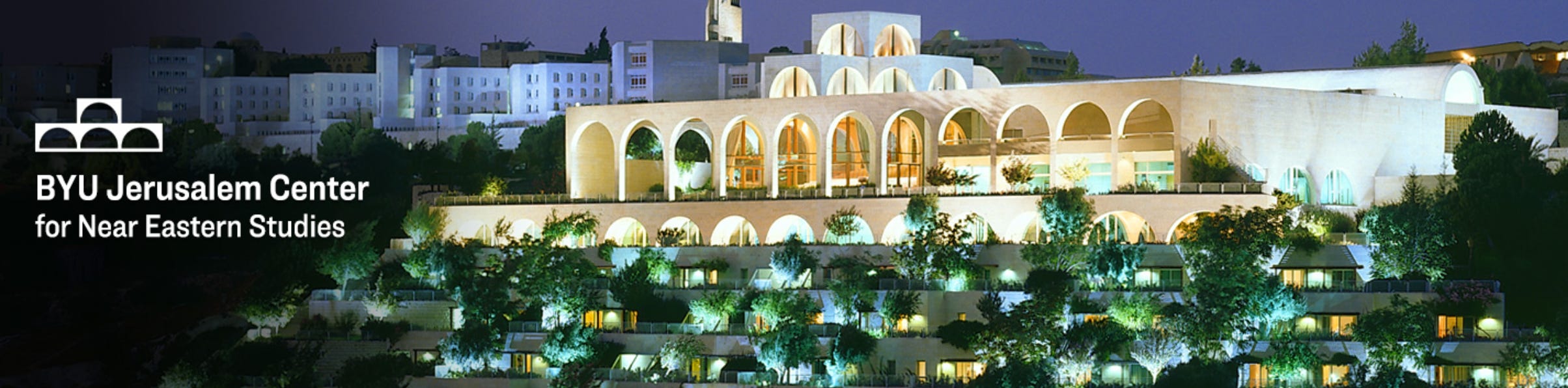
Nathan, Mindy, and I enjoyed visiting and studying in the BYU Jerusalem Center. It is a magnificent building, with many great places to quietly study. Moreover, there were frequently concerts in the concert hall. We attended many wonderful concerts in the beautiful upper auditorium. The entire building on Mount Scopus overlooks the Old City of Jerusalem with an incredible view from the balconies.
At the Rothberg International School, in addition to my Hebrew classes, I enrolled in classes on Judah Ha-Levi: Philosopher and Poet, Historical Geography of Jerusalem, Faith and Reason: Jewish and Islamic Thought, Approaching Classical Jewish Texts, and Classical Greek. I made rapid progress in modern Hebrew, and within a few months I could converse comfortably at a basic level with native Israelis. I especially enjoyed my courses on Judah Ha-Levi and Jewish and Islamic Thought because I was beginning to see how they connected with the political philosophy courses that I took under my father’s tutelage at BYU.
I also continued to build upon the theme of my BYU honors thesis regarding the relationship between reason and revelation, or physical and spiritual vision. I enjoyed excursions throughout Jerusalem in the historical geography class, and I learned the Greek alphabet. I thought that if I could learn Greek and Hebrew in addition to Latin, then I could read the Old and New Testaments in the original languages, as well as many other ancient and medieval works.
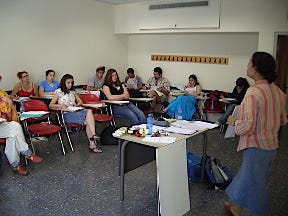
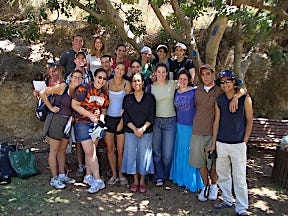
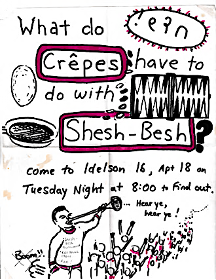
Our apartment became a gathering place for many friends. We had potluck dinners and parties. Later that semester, Torin and I also organized a crêpe night to be held twice per month. We invited all our friends for crêpe nights and enjoyed each other’s company while we ate crêpes, played the guitar, played backgammon, and practiced our Hebrew. The first official national crêpe day was on September 18, 2004.
I loved my new friends in Jerusalem. Nathan, Torin, and I became especially good friends, but I enjoyed spending time with each one of them. These students at the international school came from all over the United States and all over the world. It reminded me a bit of my study abroad experience in Northern Italy. There were students from Korea, France, Germany, and many other countries in my classes. There were Jews, Messianic Jews, Muslims, Protestants, Catholics, and a few of us “Mormons” (members of the Church of Jesus Christ of Latter-day Saints).
One evening a group of friends and I sat on the edge of hill overlooking the Old City of Jerusalem, and I posed a couple of questions: “Why were we created?” and “When have you felt strongly that you understood your purpose on earth and that you knew why you were created?” I was preparing to give a talk in church that weekend, and I was interested in my friends’ responses.
My questions stimulated an interesting conversation and interesting responses, such as: “We were created to worship God and give Him glory.” My friend Breanna mentioned her experiences in nature, under the stars, when she felt like “a significant speck of dust” in the universe. She felt intimately connected to God and His purpose for her. I remembered the birth of my youngest sister Abigail, and I shared my belief that the family is the true unit for experiencing joy and for glorifying God. It was a great conversation, followed up with ice cream and a movie (Robin Hood: Men in Tights) at our apartment.
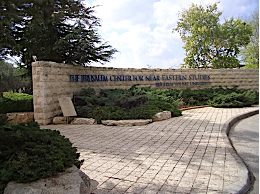
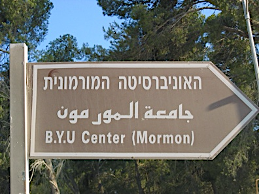
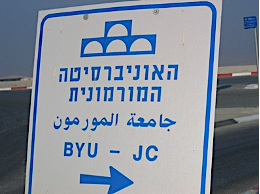
In church at the Jerusalem Center, I spoke about Jesus Christ as the Creator, and the connection between creation and joy. Sister Dorene Squires encouraged me to consider the word “glory” in connection with the creation, and with blessings that Heavenly Father wants to bestow upon us.
It was a special experience to partake of the sacrament of the Lord’s Supper in a place so close to where Jesus Christ first instituted the sacrament at the Last Supper. Afterward, Nathan and I went with the Pattersons to church in Tel Aviv. I met an elderly woman from Bolivia named Tula and I did my best to translate from English into Spanish for her. I also met a couple of students from the Ben Gurion Medical School, Bethany and Ian. In Tel Aviv, I met with my Aunt Dianne and Uncle David and their two adopted children Nathaniel and Samuel. The Pattersons then took us back to Jerusalem where we joined them for a delicious meal at their apartment in the BYU Jerusalem Center.
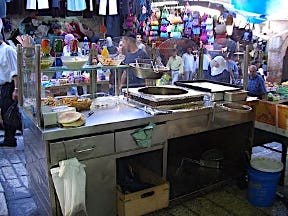
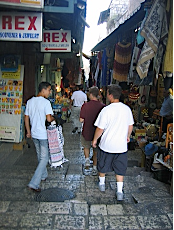
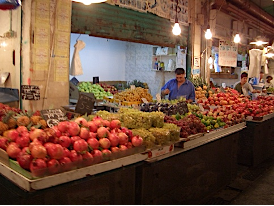
One of the things that I enjoyed most about Jerusalem was the fresh fruits and vegetables at the open market and the fresh pita bread. The food was delicious, and cheap. The markets and the shops in the Old City were always bustling with interesting people, except on shabbat (Saturday).
On Fridays, the Muslim holy day, the streets were often very crowded because of the Muslim people who walked to Al-Aqsa Mosque to worship. I almost got trampled one Friday as I made my way upstream against a current of Muslim men who were on their way to worship Allah. During the week, however, I liked to buy falafel in the Old City, or chicken shawarma. Delicious.
At the end of August 2004, two suicide bombers attacked buses in Beer Sheva. On another occasion there was a suicide bomb attack not far from French Hill where we lived. An eighteen-year-old girl blew herself up, killing two and injuring seventeen people. French Hill was not as safe as I thought it was.
I thought that my new friend Nathan was crazy to go investigate the aftermath of the incident. But Nathan was a bold adventurer and a great student of all things political and Middle Eastern. He was a miniature Lawrence of Arabia and the best travel companion imaginable. He served his mission in France, and he was a very talented musician. He was also good at ping pong and backgammon, which activities were ideally suited for our breaks between classes. I’m grateful that Nathan Hamilton chose to come to Israel when he did.
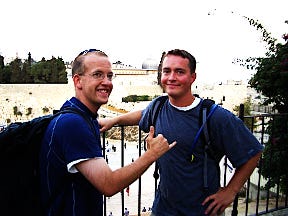
I spoke with Anne Marie on her birthday, August 30, 2004, and I learned that she had accidentally backed into a new Volkswagen Bug with her old Volvo. I know how it feels to back into a car because I accidentally backed into my cousin Bill Boy’s car with the family van. I went to McDonalds near Ben Yehuda with Josh Rona. No cheeseburgers. It’s not kosher.
At the beginning of September 2004, I went on a hike in the Judean Hills. We made homemade pita bread and homemade cheese. We also ate figs, pomegranates, and almonds. Fresh pomegranate juice is another one of my favorite things about Jerusalem.
That sabbath day (Saturday), President Wilde, the leader of our congregation, shared his faith and testimony during a joint meeting in Tel Aviv. He helped me to better understand my purpose in Israel. I felt that my reasons for coming to Israel were good, but that God had a better purpose for me. After church I went with my Aunt Dianne to see the beach in Herzliya. Then my Uncle David took me to the bus station for my ride back to Jerusalem.
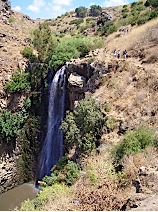
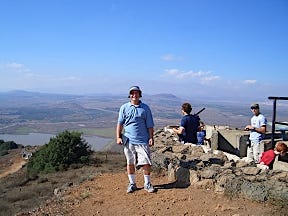
I met a couple of Muslim members of the church in Israel, including the Quffa family and Sahar Qumsiyeh. There were also many immigrants and Americans who attended church services in the different branches in Israel – Jerusalem, Tel Aviv, and Tiberius. I was struck by how many Russians and Ukrainians lived in Israel.
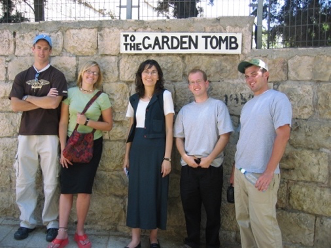
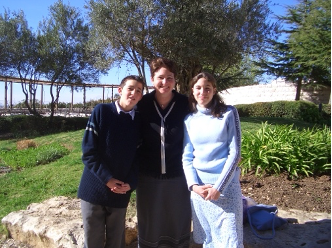
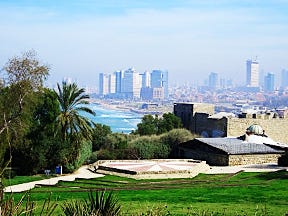
Also early in September 2004, Nathan, Torin, Aaron, and I went to the Old City of Jerusalem to visit sacred spots such as the alleged site of the Last Supper, David’s Tomb, and Dormition Abbey. Afterward, Nathan and I returned to the BYU Jerusalem Center to listen to a classical music concert: Beethoven and Mendelssohn. On September 9th, a large group of us went to Jaffa and Tel Aviv. We went to the top of the tallest building in Tel Aviv, we walked by the ocean, and we toured the beautiful city of Jaffa.
Back in Jerusalem I met Heva and Manal, two Muslim girls whose father owned a shop in the Old City. Heva served as our tour guide in the Old City, and she generously paid for everything – lunch, transport, etc. Heva and Manal loved Michael Jackson, so I gave them a couple of my Michael Jackson CDs.
The next day I went to the zoo with our ulpan class. I strolled around with Molly and Shira, observing (and learning the Hebrew words for) the monkeys (קופים), giraffes (ג'ירפות), rhinoceroses (קרנפים), antelopes (אנטילופות), zebras (זברות), bears (דובים), lions (אריות), snakes (נחשים), leopards (נמרים), elephants (פילים), and other animals (בַּעֲלֵי חַיִים).
After that, Nathan and I went to the Hadassah Hospital to see the Chagall Windows, 12 beautiful stained-glass windows that represent each of the twelve tribes of Israel.
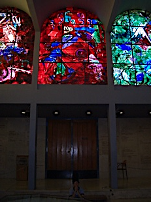
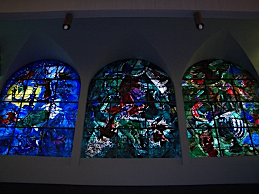
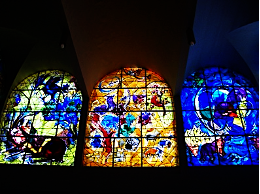
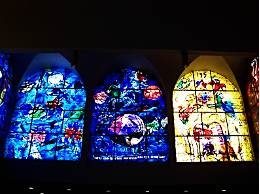
Nathan and I went to Ein Kerem to visit the chapels of St. John the Baptist and Mary and Elizabeth. Later we visited the Jerusalem British War Cemetery.
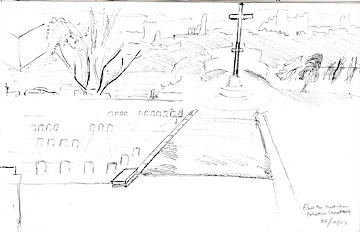
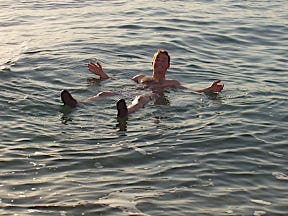
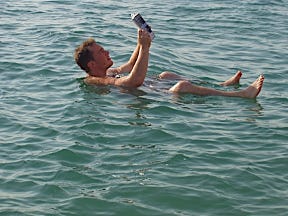
In mid-September 2004, Nathan, Torin, and I traveled by bus to Ein Gedi during Rosh Hashanah, the Jewish New Year. We slept outside on the ground, in our sleeping bags. We swam in the Dead Sea. I knew that I would float, but I was amazed at how buoyant I was, and how high in the water I floated. I could turn any which way without sinking and read a book while floating on my back.
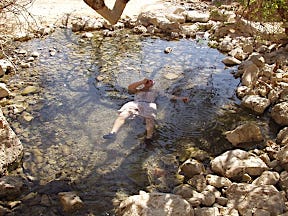
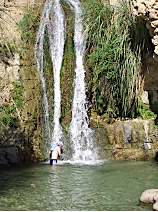
After our dip in the Dead Sea, we went on a challenging hike through a region with many freshwater springs and waterfalls. We hiked to the David Waterfall (where David hid from Saul) and the Ein Gedi Spring. We played backgammon when we rested. When we reached Hidden Falls, I dunked myself in the cool, fresh water. We spent an hour or so swimming and splashing in the waterfall. It felt great to cool down on a hot day after much hiking.
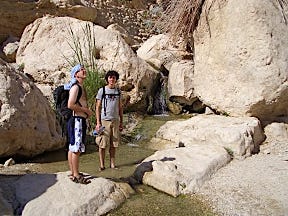
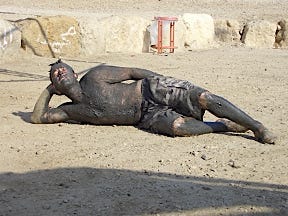
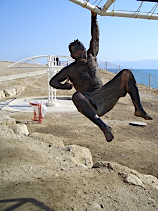
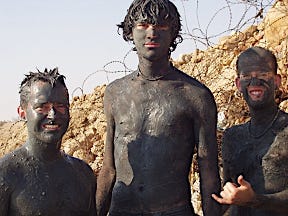
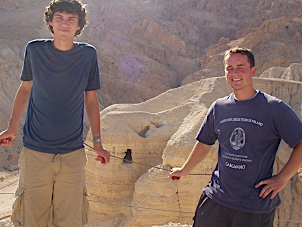
Torin set up his tent on the shore of the Dead Sea, and the next day we took mud baths, covering ourselves with the therapeutic Dead Sea mineral mud. On the way back to Jerusalem, we stopped at the Qumran caves where the Dead Sea Scrolls were discovered. The Dead Sea Scrolls and the Nag Hammadi Library contain some of the most fascinating things ever written. I met a group of Italian pilgrims there, and they introduced me to their head priest who, when he discovered that I was a “Mormon,” said that he would pray for me. Extra prayers never hurt, I suppose.
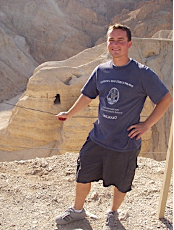
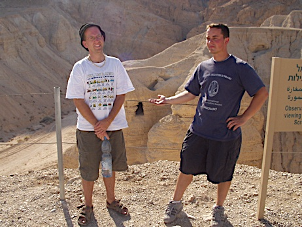
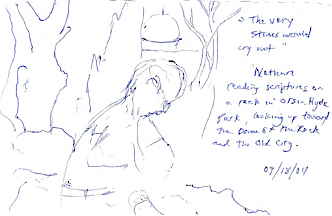
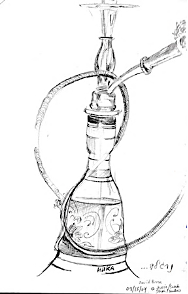
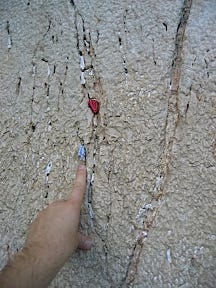
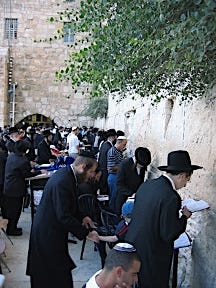
Nathan was a hiking and touring dynamo. When we returned to Jerusalem, the next day, we visited the Church of the Holy Sepulcher and the Ethiopian Church. We toured Yemin Moshe, and then we returned to ha Kotel (the Western Wall) for the shabbat evening. We inserted our prayers into the cracks in the wall. For one of my prayers that I inserted in the Western Wall, I asked God to introduce me to the most beautiful woman in the world. The next day we went to the Orson Hyde Park to study. One day I took a drag from an apple flavored hookah, because I was curious about the taste. It tasted worse than an apple.
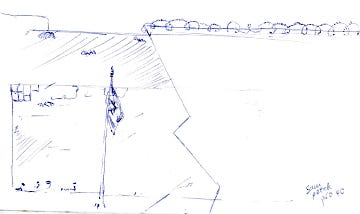
Torin and I enjoyed making up songs about our experiences in Israel by using popular songs by the Beatles, Billy Joel, and others: “Give me a ride Mr. camel man… cause we’re all in the mood for a camel ride, and you’ve got a camel alright.”
On September 20, 2004 I felt sick. In retrospect it is a miracle how well I was doing with all the hiking and walking and sports while my body and brain were being constantly poisoned with Lithium and Effexor. Four days later, the holiest day of the Jewish year, Yom Kippur, fell on my birthday, September 24. Yom Kippur is the day of Atonement, a day of penance. I recorded in my journal:
“One of the greatest birthdays of all time, celebrating my twenty-eighth birthday on the Day of Atonement, the holiest day of the Jewish year. I got to open and close the ark containing the sacred Torah scrolls during the services at the Hyatt synagogue. The services and worship, which included much Hebrew, singing, and bobbing lasted over two hours. Vows were annulled, sins were listed (even in alphabetical order), and pardons (slichas) were requested… at home Breanna let me watch a Michael Jordan video on her laptop, a special treat for my birthday. The others watched it too. It was an interesting perspective on Michael Jordan’s life, but to me it was a special gift, as if Heavenly Father were saying: ‘Johnny, I know who you are, and I love you very much. Here is a birthday treat that I know that you will enjoy.’ Indeed, I did. The whole day was one blessing followed by another.”
I began to write in Hebrew more often in my journal at this time. After class on September 28th, Nathan and I followed our Muslim friends Alaa and Heva to the Old City and to the Temple Mount. Because we were not Muslims, Nathan and I had to enter by a different way than Alaa and Heva.
Another Muslim girl also came with us. She was on her way to the Dome of the Rock to pray. Her name was Atar. She had beautiful gray eyes, and she was very beautiful. When I met her, I believed that God had answered my prayers to introduce me to the most beautiful girl in the world.
Nathan and I were not allowed to enter Al-Aqsa or the Dome of the Rock. But as soon as we passed through the gate to the Temple Mount, I felt a powerful peace, the kind of peace that I have only felt in the Temple, the House of the Lord. It is miraculous to consider that such peace may be felt in the most disputed and contentious area of the world, a place of great conflict. I wondered if I felt that peace because someday there would be a Temple, the Third Temple, in Jerusalem. Then we miraculously had the opportunity to enter the Dome of the Rock because of the persuasions of Atar, Alaa, and Heva.
A day or so later, I heard a knock at our apartment door. I opened the door and Atar stood before me in all her beauty and splendor. I don’t know how she found my apartment, but when I saw her, I felt that I had known her from a previous life, and that she was my perfect match, except that she was Muslim. It was a surreal experience. God answers prayers.
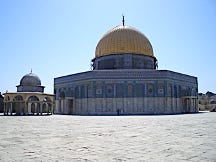
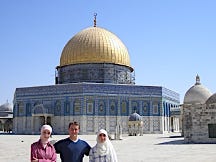
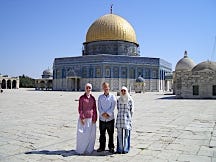
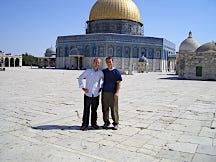
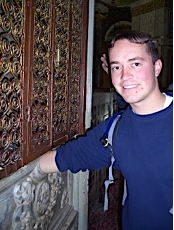
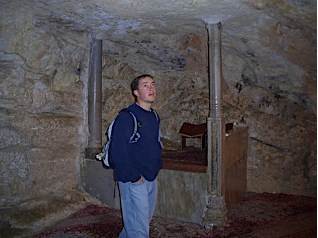
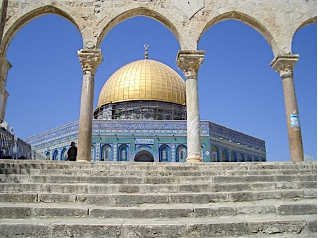
Some researchers surmise that sacred relics are buried in secret chambers underneath the Dome of the Rock. Some even suppose that the Ark of the Covenant and other sacred Temple items are hidden there. Still others think that the Knights Templar excavated near this site and obtained sacred treasures or secrets that they carried with them.
If any of this is true, then I was standing on even holier ground. When I entered the cave beneath the Dome of the Rock, I didn’t realize that there may have been other caves and secret tunnels beneath my feet. Many Jews and Christians believe that Abraham was commanded to sacrifice Isaac on the rock above where the Dome of the Rock is built. Muslims believe that Abraham was commanded to sacrifice Ishmael. For these and many other reasons, it is prime real estate. I’m grateful that I saw and touched the rock.
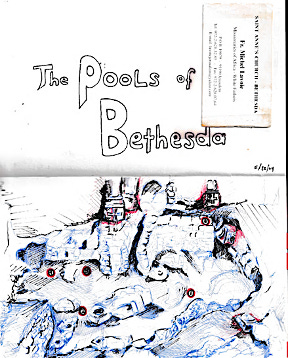
Another place that I loved to visit in Jerusalem was Bethesda. I spent many hours by the ancient pools of Bethesda. I felt sick again on September 30th, so when I went to the pools of Bethesda, I plead with Heavenly Father for healing while I thought about how Jesus Christ healed the paralytic man. If Jesus Christ healed the paralytic man, didn’t He have the power to heal “mental illness” and “bipolar disorder”? I had faith that if the Lord could heal the paralytic man, he could certainly heal me. My prayer was eventually answered, but in a way that I never would have expected.
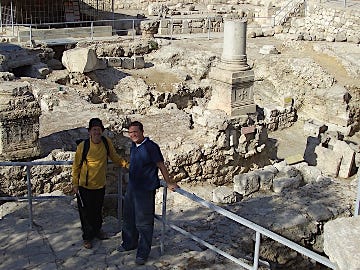
It was the week of Sukkot, the feast of booths or the feast of tabernacles. After returning home from Ben Yehuda through Mea Shearim, an ultra-orthodox region of Jerusalem, Nathan and I hunted for the four species of plants for Sukkot and for a party with Hasidic Jews. We found the lulav, lemon, willow, and date palm branches, and we found a group of bearded men who were on their way to a celebration of Sukkot. We followed them and found ourselves in a room with hundreds of Hasidic Jewish men who danced and moved rapidly in a circle. Nathan got swept up in the dance. It was like a Jewish mosh pit. It was the best way to celebrate the exodus and the liberation of the Israelites from Egyptian bondage.
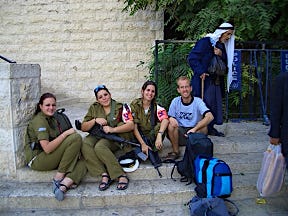
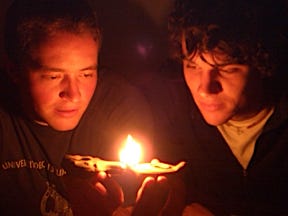
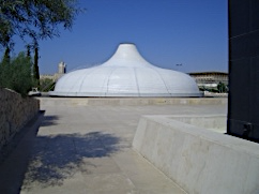
Back at the apartments, Nathan constructed a makeshift Sukkah out of chairs and sheets. I brought my mattress and my sleeping bag, and we slept in the Sukkah all night. An Israeli soldier awakened us in the morning and informed us that we weren’t allowed to camp on the dormitory property. Later that day, Nathan and I went to the Shrine of the Book and the Israel Museum. It was amazing to see the original Dead Sea Scrolls, and especially the Isaiah scroll. The Essenes were a fascinating group of people.
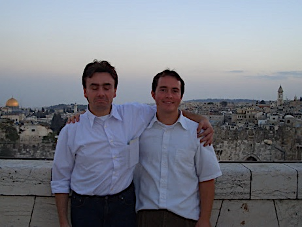
Early in October 2004, Nathan and I travelled again to Galilee. We drove with Daniel Rona, first to Masada and Qumran, then to Tiberius, to Rosh Pina, and other places. Nathan and I slept in a park, while Rona’s group stayed in a hotel. Not coincidentally, I met a young man in the group named Wesley Bertch who had served his mission in the Italy, Catania mission from 1991 to 1993. We practiced our Italian together. When Wesley discovered that Ralph Hancock is my dad, Wesley excitedly exclaimed: “No way! I can’t believe this! That guy was like a god to me!” because he had taken his class on American Heritage. Later, I also met an LDS Italian friend named Paolo Palmieri.
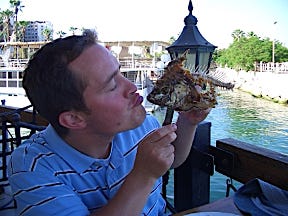
Next, we went to Capernaum where Jesus did many miracles. We ate St. Peter’s fish at a restaurant, and Daniel Rona shared his testimony of Christ with us, along with many interesting historical and linguistic insights. We went to the Mount of Beatitudes, and we read passages from the Sermon on the Mount. There were a group of Italian nuns and other Italian people there. It is one of the most beautiful and scenic areas in Israel.
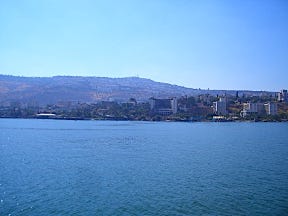
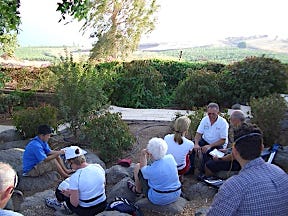
Nathan and I slept in the van that night because the night before a bunch of stray dogs came to the park and barked at us, and it was also cold. The next day we went to Nazareth, Armageddon, Mt. Tabor, and Caesarea. We made our way back to Jerusalem through Tel Aviv after pausing in Jaffa. We went to a diamond store called Caprice where I spoke with a French lady named Jacquelyn and we learned all about diamonds. Then we returned to Jerusalem again.
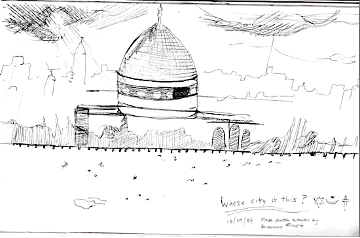
I went on a date with my Jewish friend Sarah Rabin, and we talked about literature and God’s commandment to multiply and replenish the earth. Mindy Anderson arrived in mid-October. It was great to have another LDS friend at the Hebrew University of Jerusalem with us. She was working on a master’s degree In Hebrew Bible at Harvard University. In church Mindy gave a talk on prayer. I visited Dianne and David and the boys again, and that peaceful shabbat evening I wrote a poem:
“The Savior will return, and soon,
To gather in His sheep,
Wars and tempests, blood-red moon,
Heavens’ hands approach high noon,
While many souls still sleep.
Awake! Shake off the awful chains!
That Satan slyly wields,
Awake, take up the sword of truth!
Cast off the follies of thy youth!
Make faith in Christ thy shield.
My mind caught hold upon this thought,
I cried inside my heart,
O Jesus, Thou Son of God, I am distraught,
Because of sins Thou hast forgot,
That follow like a cart.
‘John, my child, so meek and mild,
I have ransomed thee,
Oft, as men, ye are beguiled,
By Satan’s tricks ye are defiled,
But I have set thee free.’
How is it done, Thou Righteous One?
Why hast Thou chosen me?
When from the chains of hell I run,
Why does Thou hear my plea?
‘John, through Me, a second birth,
Purifies Thy soul,
Thy days be long upon the earth,
Counting souls of greatest worth,
And I will make Thee whole.’
They said, ‘Physician, heal thyself,’
If they had only known,
That through Thee is Celestial health,
And charity’s eternal wealth,
Which in my heart was sown.
Oh what joy, and marvelous light,
This morning I behold,
For Thou hast freed me with Thy might,
Preparing me for truth to fight,
Shining, pure, and bold.”
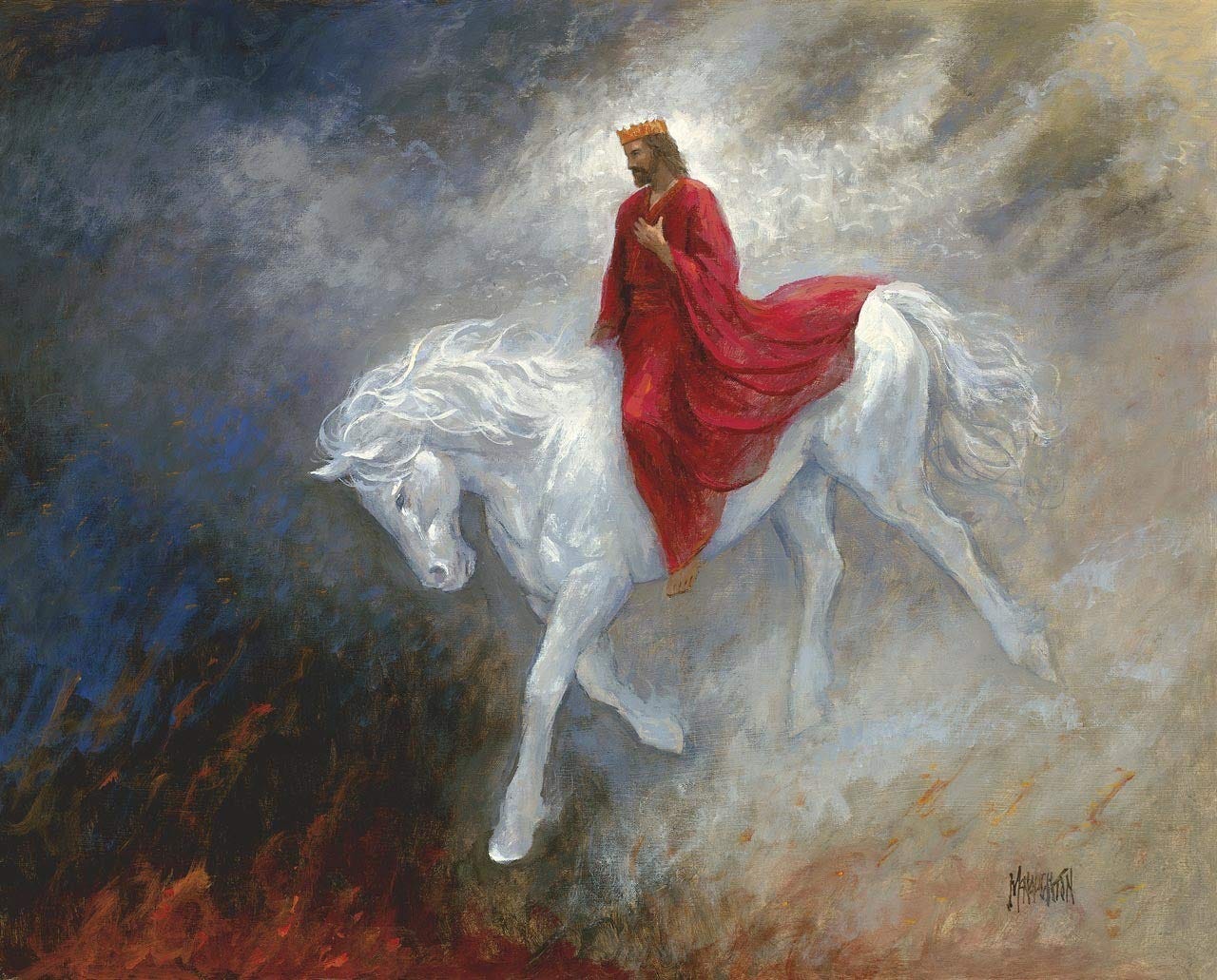
In my class on faith and reason in Jewish and Islamic thought we read from Lerner and Mahdi’s book on medieval political philosophy. It is a great book. We studied works by Plato, Averroes, Alfarabi, Maimonides, Ha-Levi, and Leo Strauss. My classes had little to do with medicine (except that Maimonides, Avicenna, and Judah Ha-Levi knew a thing or two about medicine), but I was learning things that I truly wanted to learn.
It was real learning, and not just memorizing and regurgitating information. I was beginning to make the connections between my study of Dante, the things that I studied in my dad’s classes, and the writings of the great Jewish and Islamic thinkers. Yet I still knew very little about Leo Strauss or the history of political philosophy.
I was still seeking for truth and a liberal arts education. Liberal education should already be available to high school students, and especially to undergraduate college students. American Heritage, Meridian, Waterford, and BYU did their best, and I found pieces of a liberal arts education here and there. I found another piece in Israel. It’s not coincidental that Leo Strauss famously spoke and wrote about the topic of “Athens and Jerusalem.” Strauss even gave his “What is Political Philosophy?” lectures at the Hebrew University in Jerusalem.
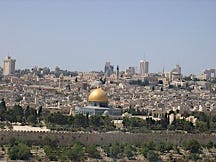
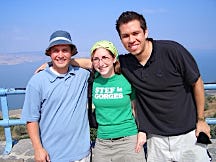
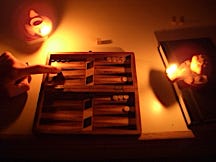
Living and studying in Israel was one of the greatest experiences of my life. I enjoyed every minute. But I also struggled with my health. I pondered by the pools of Bethesda, wondering how Jesus Christ would heal me from “mental illness” and “bipolar disorder.”
I recorded in my journal:
“Recently I have had the impression that it is time to withdraw from my medications, or the medications that have been given to me, and that I have taken. I would very much love to stop, and I still believe that there is a better way. What should I do? … I forgot to take my medicine this morning, and I feel fine. But of course, it would affect me. It is just too much of a hassle, and I feel like it is bad for my brain, my body, and my spirit. What should I do? I will be obedient, but somehow, I feel that there is something good I can do, something I can help bring to light. I am sure that I don’t have to worry about it, and that Heavenly Father will help me, in His own time and in His own way, which is always true, and beautiful, and amazing to my feeble understanding. In other words, the topic of bipolarity returned to my mind today, even though I have mostly forgotten about it.”
I had trouble finding a way to refill my Lithium prescription, and I could feel the difference when my Lithium levels dropped. It was horrible, but I had to figure out a way to cope. My mother and my sister Abby went to Arizona. Anne Marie went to visit Nathaniel in Monterrey. Jared, Lucinda, and Calvin were in Provo, as was my father who continued teaching at BYU.
Meanwhile, I was invited to participate in a Jewish shabbat gathering with Rabbi Gentilcor in the Old City. It was the best fifty shekels that I have ever spent. With Rabbi Gentilcor and about thirty or forty young Jewish people, I walked to the Kotel, the Western Wall, where I davened – prayed – and danced with my friends. I felt like a bee in a hive.
Then our group went to the home of the Chief Rabbi of the Old City. He was hunched over, and gray, very old. He was well known as a Zadik, a sage, a true Jewish wise man. He spoke to us briefly in a voice that was hardly comprehensible about the Nes – the miracle – of Hannukah. The real miracle is not just that the Maccabees warded off the Roman legions, or that the candle was not destroyed and burned for eight days. The true miracle is that the Jews brought their faith in God and just enough oil for one day. As we broke and shared the challah bread and poured the grape juice, I thought of the sacrament. I missed sacrament meeting that day, but I participated in a kind of Jewish sacrament meeting.
On shabbat morning, I read the first few chapters of Genesis in Hebrew. I also began to speak Hebrew more fluently. Heavenly Father blessed me and increased my capacities. During the shabbaton experience, I learned many things about Judaism and about myself. I recorded in my journal:
“I learned some interesting things about light, receiving and giving. I learned something about why I came into the world. At a certain point, the Rabbi spoke about kindness, and I was touched with a feeling that my purpose is to express that kindness which comes from God, to be a channel or an instrument of kindness. I also learned a lot about the connection between body and spirit – learning to see with my spiritual eyes – and to understand that each individual human being is a precious soul that merits love and forgiveness by the mere, but great fact that he or she is a son or a daughter of God. This gives me great confidence. It also helps me to let go of myself, and my own agenda, and to trust in the Lord more firmly and more assuredly – to believe that despite my weakness I am essentially good, and potentially great in the eyes of God. These things I learned or relearned in the midst of my Jewish brothers and sisters.”

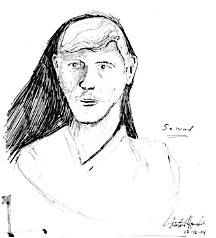
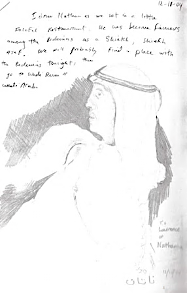
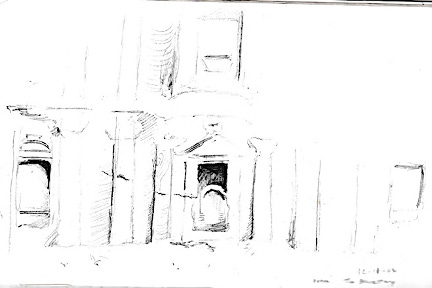
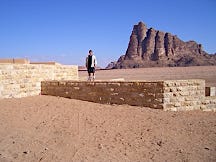
Soon after the shabbat experience, I travelled to Jordan with Nathan Hamilton and a group of friends. We went to Petra. Nathan dressed in his white robe and wore his keffiyeh. He was like Lawrence of Arabia, the remains of whose house, and the mountain of seven pillars, we saw. We were astounded by the sheer size of Petra and the number of temples that had been carved into the cliff walls. We entered the stone temple that Indiana Jones made famous in The Last Crusade. Fortunately, there were no sharp blades that chopped off our heads. But neither did we walk across a deep ravine on an invisible bridge or speak with any ancient guardians of the Holy Grail.
However, I enjoyed learning more Arabic in Jordan and conversing with any Muslim brothers and sisters in Jordan. I was fascinated to watch an Arab music video in which the women twirled their long hair around in a big circle. Because most Muslim women wear the hijab, it seemed very scandalous for the women in the video to twirl their hair around in a circle. One night, Nathan and I slept in a cave under the stars with some Bedouin. We went to Wadi Rum and ran down giant sand dunes. We returned to Israel through Amman and the Allenby Bridge.
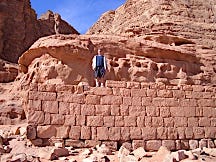
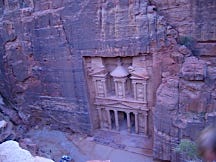
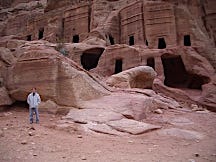
On Wednesday, December 15, 2004, I went to the Ben Gurion Airport. After about four months in Israel, and what seemed like a lifetime of experiences, I returned to Utah for Nathaniel’s wedding. When a woman on the bus asked me what brought me to Israel, I replied, “Ha Shem” (God). On the flight to Newark, I watched i-Robot and slept for most of the 11-hour trip.
Nathaniel picked me up from the Salt Lake City airport. I am grateful that I attended Nathaniel and Felicity’s wedding in the Salt Lake City Temple. I recorded in my journal that I felt that the wedding was beautiful, and that the sealing was real – that the Holy Spirit of Promise had sealed their union. I was grateful that Nathaniel and Felicity were happy.
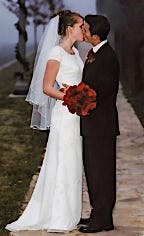
While I was in Utah, I also went to the Mount Timpanogos Temple with John Henry Jorgensen and Robert Ricks, two of my good LDS brothers who were still single and searching. I was grateful to see the rest of my family as well. I had the opportunity to play basketball with my dad. I accompanied Jared and Lucinda to the Waterford Christmas dinner where I saw Ben and Karen, Sam and Danielle, Stuart Miller, and a lot of other Waterford friends. Stuart’s sister Eliza gave me a copy of Chaim Potok’s book The Chosen, which I read during the return trip to Israel. It is a great book.
My father was the bishop of the ward, and I went with him and my mom to visit some people who were sick and afflicted, such as our friends Paul Rasmussen and Rachel Cannon. Abigail gave me a little box with a Jerusalem inscription on it for Christmas. I had dinner with the Browns in Orem, and Amy Livingston came too. I visited Matt Holland to tell him about my adventures in Israel. I returned to Israel on Christmas day 2004. When I returned to Israel, Abigail sent me a cute email to tell me that I was fun and funny.
At the end of December 2004, I noted in my journal that I began to study Isaiah again. I had read the Old Testament all the way up to Isaiah during this time. I went grocery shopping, did my laundry, and helped Torin to clean the apartment. I felt ready to study again.
For shabbat I went to Herzliya again for a fast and testimony meeting (a meeting in which members of the Church of Jesus Christ of Latter-day Saints fast from a few meals and come prepared to share their faith in and testimonies of Jesus Christ), and to spend time with Dianne and David and their family. Back in Jerusalem, Nathan and I helped with the concert at the BYU Jerusalem Center, taking tickets at the door. It was great to hear renditions of songs from George Gershwin’s Porgy and Bess, and Leonard Bernstein’s West Side Story. The new West Side Story is also sublime.
January 3, 2005, was half-crêpe day. Crêpe day was every 18th of the month, and half-crêpe day was every 3rd of the month. Whoever wore the “crepe cloak” was responsible to make crêpes, because I told Torin that “with crêpe coat come crêpe responsibility.”
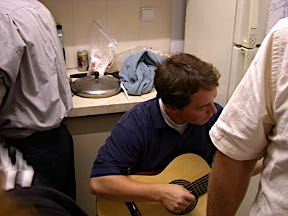
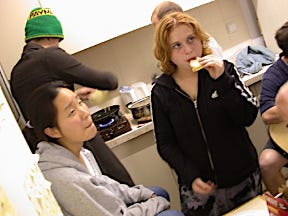
A few days later I went to Tel Aviv with the Israeli Friends program to a museum that teaches people about the blind. Our guide, Mari, was partially blind, and she taught us about the challenges faced by those who are blind. I was reminded of my Australian friend Louise and her challenges. We spent about an hour together in pitch black room, and Mari taught us about navigating by sounds and feelings, by touch and smell and taste.
The experience caused me to reflect again with gratitude on the gift of physical vision, just as my friend Louise Nicholson had taught me to do. Mari wanted to teach people to “see” in the way that blind people “see.” I noted in my journal that after an hour of darkness, my eyes thirsted for light, and that even a small spark of light in the darkness was beautiful to me. One little spark of light annihilated darkness.
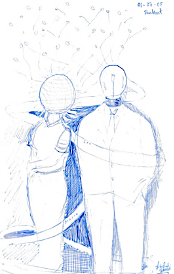
On January 21, 2005, I was stopped by two female Jehovah’s Witnesses who gave me pamphlets to read. I thought it was bizarre, and unjust, that Jehovah’s Witnesses could proselytize in Israel, but that members of the Church of Jesus Christ of Latter-day Saints could not.
That same day, my aunt Dianne generously offered to help pay for a trip to Egypt. She gave me a very generous gift of money that enabled me to do more traveling and to focus more intently on my schoolwork. I was very grateful because I did not think that I would be able to go to Egypt with my friends. The day after that, from a perch on the west side of the Hebrew University, I composed a few thoughts:
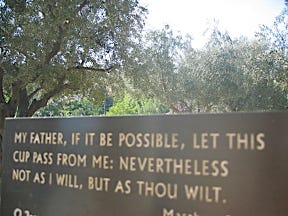
“I can see the Old City, the new city, the Mount of Olives, the BYU Jerusalem Center, and the world. I sit in an area where I can observe some of the physical manifestations of my fond dreams. I am in Jerusalem, the Holy City, where Jesus undertook the greatest work of all time. Jesus was born not far from here in a town that is now surrounded by a security wall. He taught and lived in Nazareth, near the Galilee, but He was rejected. Jesus was betrayed by His friend after suffering beyond measure in Gethsemane, a garden of olive trees that He visited often with His disciples.”
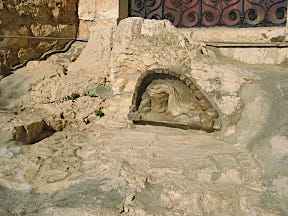
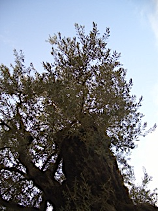
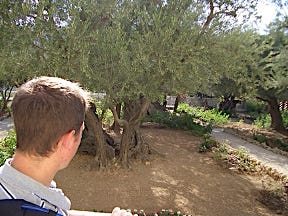
I took tests, wrote papers, studied Hebrew, and prepared for a trip to Egypt. Hartman Rector, Jr. came to speak at the BYU Jerusalem Center, and his message reminded me that I am here to raise up children unto the Lord, and that enduring to the end means continually repenting, continually forgiving others, being kind, and having charity, as Elder Renlund has also recently taught.
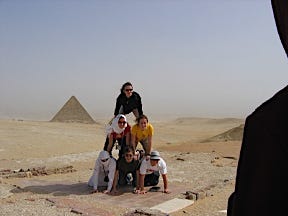
At the end of January, thanks to my aunt Dianne’s generosity, I traveled to Egypt with Nathan Hamilton and a small group of friends, including Phil, Sarah, Brie, and Abby. It was an incredible experience, like visiting Petra in Jordan, but even better. After twelve hours of riding in buses and taxis, and a good night’s sleep, when I awoke in the morning in the hotel room in Cairo, I looked outside the window to see the pyramids in the distance. I could hardly believe my eyes. I had seen the pyramids many times in videos and pictures, but when I saw the pyramids with my own eyes, they almost didn’t seem real.
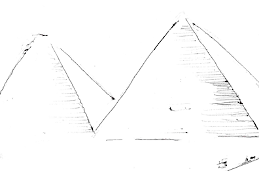
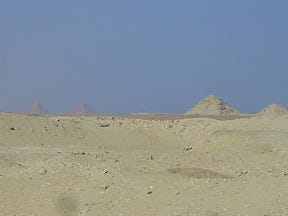
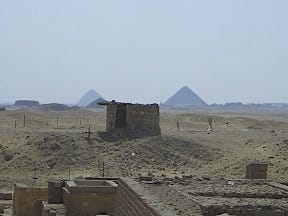
We met our tour guide, Mustafa, a kind Egyptian man about my same age, and we drove to the pyramids together. In the dust storms we explored the base of the Great Pyramid, and we went inside the second pyramid. While we were walking inside the pyramid, the lights went out. One of my friends panicked a bit because she was claustrophobic. The darkness inside the pyramid was even thicker and darker than the darkness in the room with no light at the museum for the blind in Tel Aviv. We could not see anything at all. After a short time, the lights came back on again, and we resumed our journey.
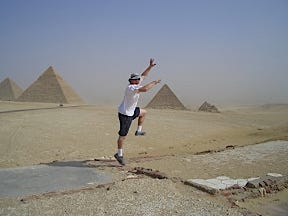
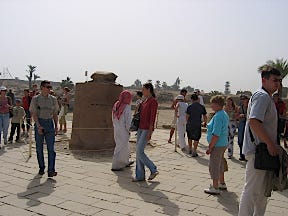
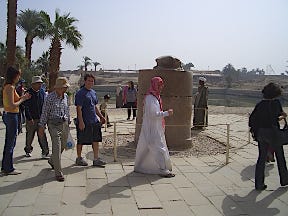
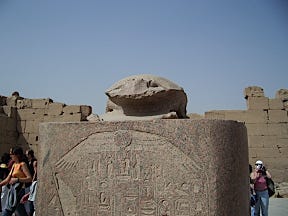
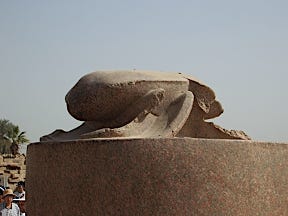
There was a statue of a scarab. Our tour guide instructed us to walk around the scarab. We were told that as many times as you walk around the scarab, that is how many children you will have. I continued to circle the scarab many times after most everyone else had stopped.
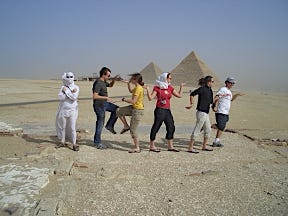
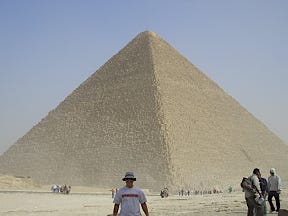
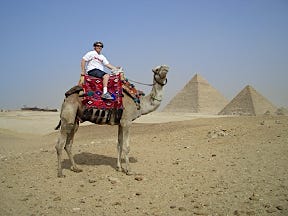
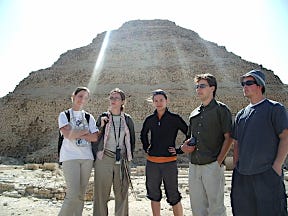
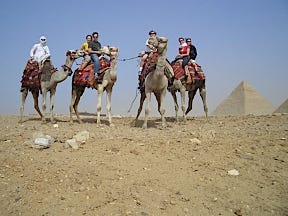
We rode camels. My camel was wild. It tried to bite my thigh. It was the first time that I had ever ridden on a camel, and it was worth it. The pyramids are amazing structures. Of course, we wondered about and debated the purpose of the pyramids and the method of construction. I wish I would have known about Graham Hancock before this time.
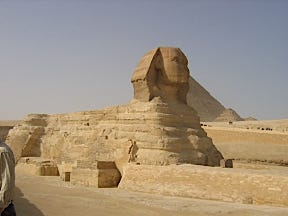
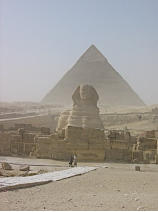
The Sphinx was also an incredible sight. I wish that I would have known at the time that Edgar Cayce, “the sleeping prophet,” alleged that there was an ancient library, a “hall of records,” buried beneath the Great Sphinx of Giza. I’ve always wanted to discover a great hall of records that contains the accumulated ancient wisdom of Atlantis.
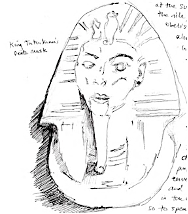
We visited the Egyptian Museum where we saw King Tutankhamun’s treasures and many other fascinating things. I accidentally left my journal on the steps at the Egyptian Museum, but fortunately a guard at the Museum helped me to recover it. That was a miracle. Thank goodness for that guard. My journal from the Holy Land enabled me to write this chapter.
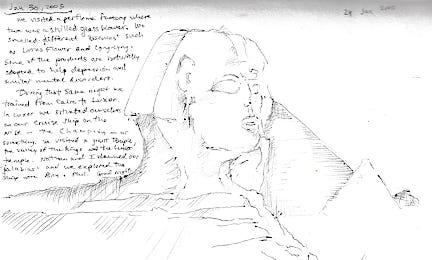
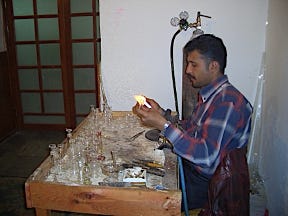
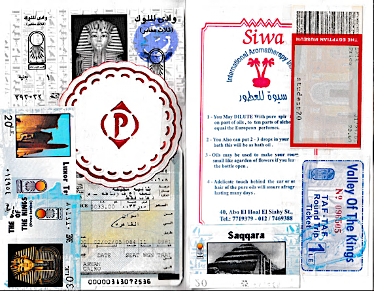
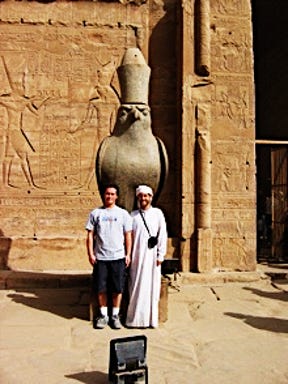
In Cairo, we visited a perfume factory where there was a skilled glass blower. I was always fascinated by the process of glass blowing. We smelled different essences such as lotus flower and ylang ylang. That evening we took a train from Cairo to Luxor, where we boarded a cruise ship on the Nile. We visited a giant temple in the Valley of the Kings, and the Luxor temple. Nathan and I wore our jellabiyas.
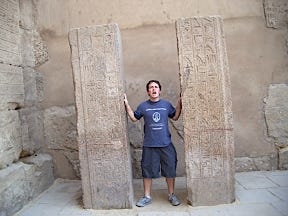
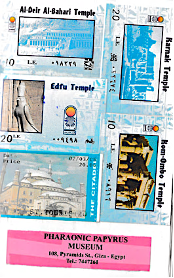
We visited the largest temple in Egypt, the Karnak Temple. Mustafa guided us around the temple, teaching us about wars, pharaohs, hieroglyphics, and Nefertiti. We made up a new game called “Hide and Go Shiekh,” a game like sardines where we looked for Nathan. I would love to study all these Egyptian things in more detail.
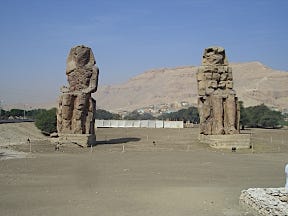
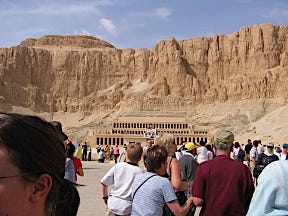
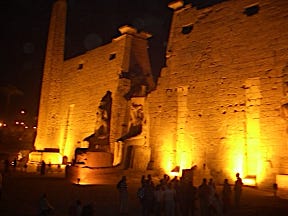
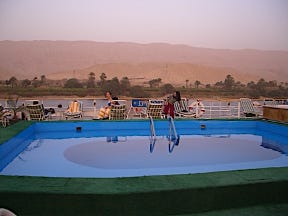
Back on the cruise ship we went swimming and hot tubbing on the top deck, and then we gathered in a beautiful, circular room with soft couches and earth tones. It was a very calm and peaceful place. Later I went out on the top deck again:
“Looking at the sunset over the Nile, over an obelisk like monument, alone, and looking up into the clouds, I felt like God was very nearby. It wasn’t a huge epiphany or an explosive spiritual experience, but I felt an actual closeness, a presence that enveloped me and wrapped me in the arms of love… I can’t explain the peace, the calm – it was so real, and yet so ethereal, so solid, and so spiritual, so human, and so Divine. That’s it. It was a moment of recognizing God’s greatness and my nothingness combined in a beautiful relationship.”
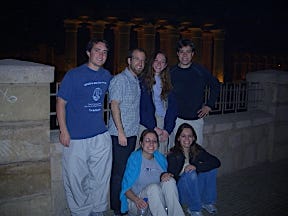
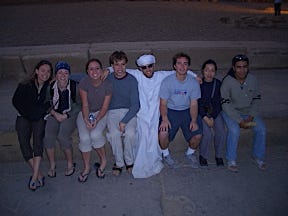
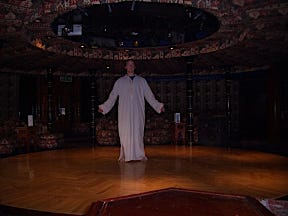
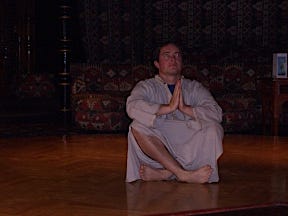
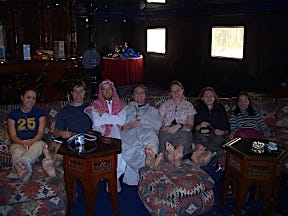
One night my friends and I danced to Arabic music while we were wearing our jellabiyas until we worked up a sweat. We had a delicious dinner together. After his short lecture on Egypt and the Bible, Mustafa asked me questions about my faith, and I was happy to respond.
We went to a beautiful carpet store. There were many beautiful rugs and carpets of all kinds, and I thought of my Grandpa Hancock’s carpet store. I bought a papyrus with a picture of a tree and birds with my family name written in Arabic on it.
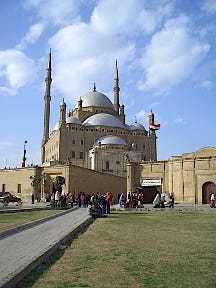
We went to the Mohammad Ali Mosque, and Mustafa taught us about prayer, and about how Muslims pray. I asked Mustafa if God answers prayers, and he replied: “Yes, but He gives us what we need, not always what we want.” Good answer. It was a great experience in a beautiful Mosque with a very kind and good Muslim brother.
I am grateful that I had such wonderful experiences just a short time before one of the most difficult and painful experiences of my entire life, my personal Gethsemane near Gethsemane.
On February 4, 2005, we began our return journey to Jerusalem. Nathan stayed behind in Cairo to catch a flight to the United Arab Emirates. I wanted to visit Mount Sinai, but the others were anxious to return home. The journey from Cairo to Dahab to Eilat to Jerusalem was taxing. I got very sick during the trip, and it took me a while to recuperate once we were back in Jerusalem.
The day before Valentine’s Day, my friend Abby invited me to a café so that we could talk. We were a bit cuddly and friendly on the return trip from Cairo, and she wanted to make sure that we understood each other. She was concerned because I was a “Mormon,” and not a “Christian.” She also thought that Mormons believe that all other people, people of other faiths, are destined for hell.
This was not the first time, nor would it be the last time, that I would deal with this kind of confusion and misunderstanding. I assured her that we members of the Church of Jesus Christ of Latter-day Saints believe in Jesus Christ, that He is the Son of God, and that we don’t believe that everyone else is going to hell. In fact, we believe in a much more merciful and just Heaven of three degrees of glory (of which the Apostle Paul also wrote), each suited to our choices and the eternal laws by which we choose to abide.
On Valentine’s Day, I went to the BYU Jerusalem Center for a piano concert with a group of my fellow Christians. It was a beautiful concert. I continued my studies, and I continued to familiarize myself with Jerusalem and the surrounding regions. There weren’t any BYU students at the BYU Jerusalem Center during this time because of the intifada and concerns about suicide bombings and other violence.
I signed up for more classes: medieval Jewish literature, intellectual life in medieval Spain (Maimonides, etc.), early Christianity and the world of late antiquity, and Hebrew. I was officially accepted into the master’s degree program in Jewish Civilization, but I was thinking about changing to Religious Studies.
Aunt Dianne gave me another generous gift of money, this time an inheritance from my Grandpa Elmo. My Stafford Loan was reinstated, and I felt more optimistic about being able to complete the program in Israel. I enjoyed life in Israel and knew that I was there for a good purpose. I went to Jaffa with Sarah Dorsey and her mother, and then I went to Herzliya to visit the Secklers (Dianne and David and the boys) again.
In Hebrew I advanced to the third level, level Gimel (after Aleph and Bet). I was excited for my new classes. I met a beautiful young lady from Ukraine, Diana, who was in the Israeli Army. She worked on helicopters. She was a member of the Church of Jesus Christ of Latter-day Saints. We walked on the beach together, and we spoke to each other mostly in Hebrew.
I played paintball one evening with friends. I went on a mountain biking trip with Torin, Dave (my new housemate), and other friends. It was a wonderful experience to ride through the beautiful countryside of Israel.
In early March 2005, Nathan Hamilton and I had a great conversation about our favorite experiences in Israel thus far as we walked home from the Jerusalem Center. My new housemate Dave had many questions about the Gospel of Jesus Christ and the Church of Jesus Christ of Latter-day Saints, and I did my best to respond without proselytizing.
Life was blissful. I was fulfilling my life-long dream to live in Israel, to study Hebrew, and to learn about the Jews. How could I have known that only a short time later, I would descend into my own personal Gethsemane in Jerusalem? How could I have known that my faith and perseverance was about to be tested to the uttermost?